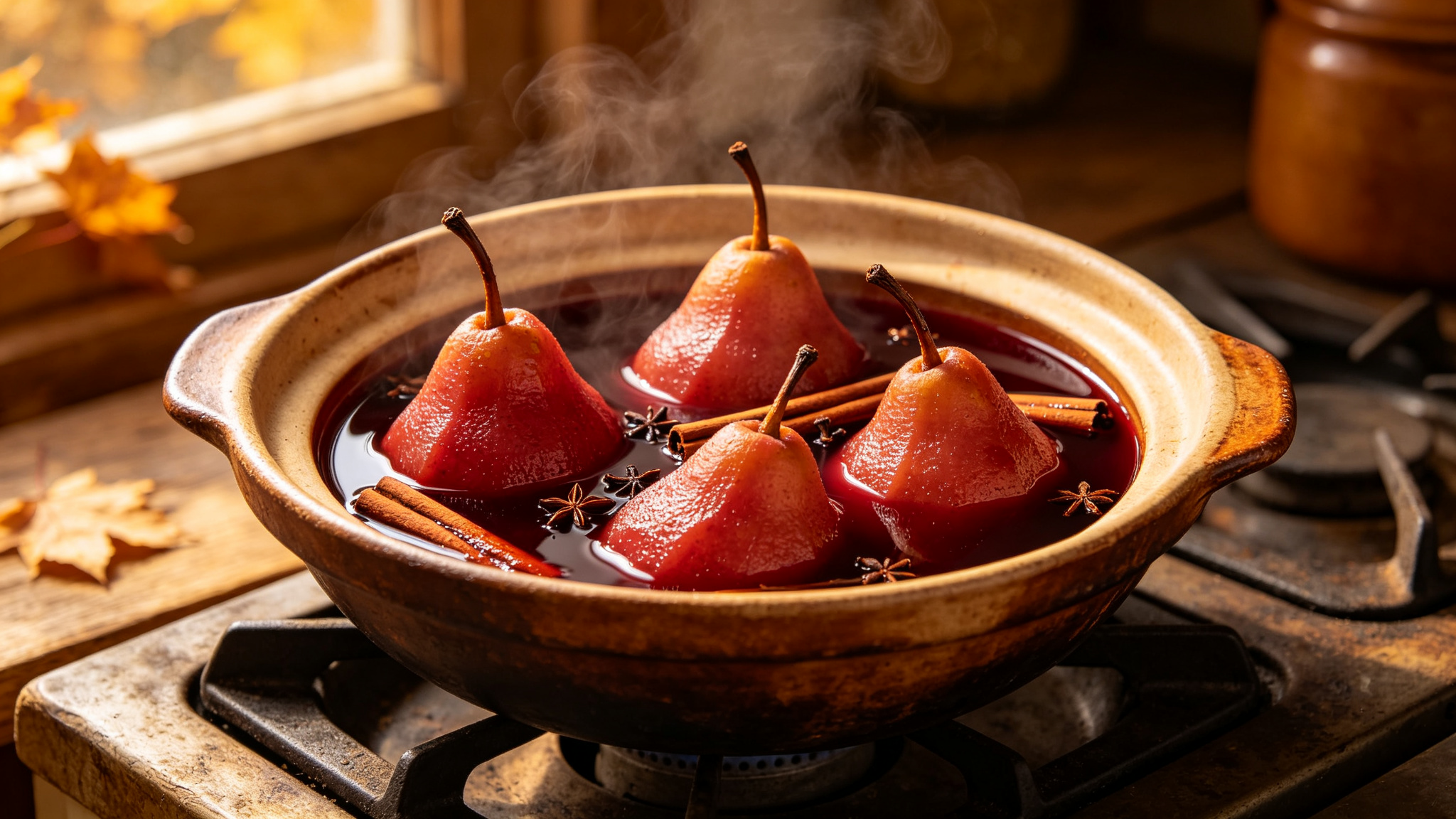
As autumn deepens and mornings turn dewy and cool, our bodies start asking for warmth. One of our favorite ways to answer is with a bowl of pears gently poached in red wine — a fragrant dessert that doubles as a soothing comfort food, especially for anyone whose stomach tends to run cold.
Why Pears in Red Wine?
This trio has been loved in traditional Chinese seasonal eating for a long time, traditionally served around the White Dew (Báilù) solar term — the season when autumn dryness sets in and the lungs need extra care.
- Pear is naturally juicy and cooling. In traditional food wisdom it helps moisten dryness, supports the lungs, and keeps the skin looking hydrated and radiant.
- Red wine brings warmth and depth of flavor. Simmered gently over low heat, almost all the alcohol cooks off — what remains is a rich, mellow sweetness.
- Cloves are the quiet hero. This warming spice balances the cooling nature of the pear, so the dish protects the spleen and stomach instead of chilling them. It's what makes the recipe gentle enough for cold-stomach types.
Ingredients
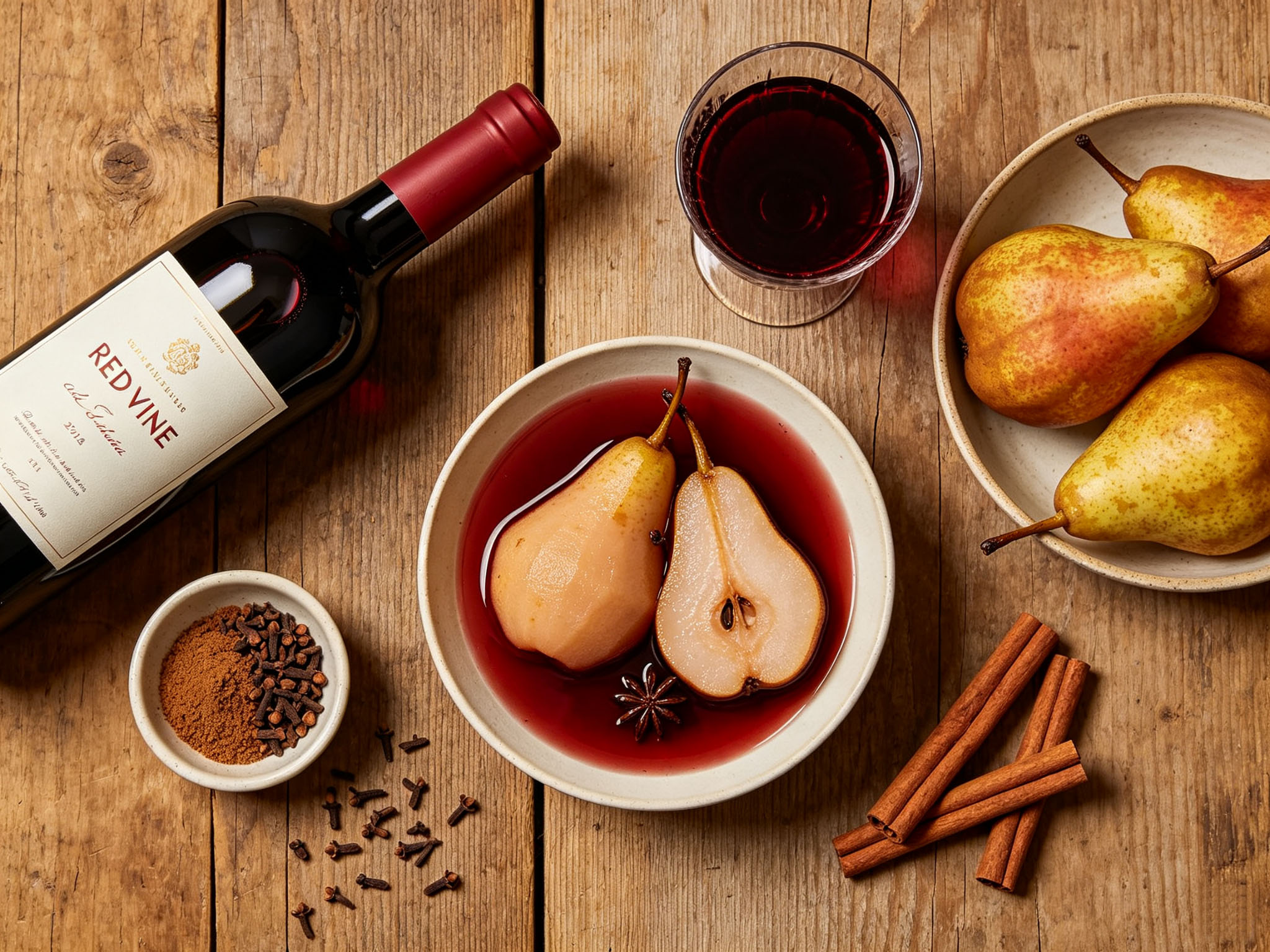
- 2 ripe but firm pears (crisp-sweet varieties work best)
- Red wine — enough to reach about halfway up the pear pieces (a fruity dry red is ideal)
- ½ teaspoon ground cloves
How to Make It
What It Does For You
Nourishes the lungs. Pears have long been used to moisten autumn dryness and support lung health — perfect for the crisp, dry season.
Supports radiant skin. The same hydration that comforts your lungs helps your skin glow from within.
Warms the stomach. Cloves harmonize the pear's cooling nature, protecting the spleen and stomach — gentle even for sensitive, cold-stomach types.
Who Should Skip It
Enjoy it another day if you currently have:
- Excess phlegm (lots of mucus)
- A wind-cold type cold (chills, clear runny nose, feeling cold)
- Diarrhea
One more note: because pear is naturally cooling and cloves are what balance it, anyone with a sore throat or throat inflammation should leave out the cloves — the pears alone (simmered in wine) are still fine.
Pro Tips
- Don't cover the pot. Leaving it open lets the alcohol evaporate as the fruit drinks up the wine's flavor — and keeps the texture from turning mushy.
- Low heat only. Patience gives you glossy, jewel-red pears instead of broken, dull ones.
- Keep a little syrup. Stop when a small amount of juice remains — that glossy sauce is the best part, so don't boil it dry.
- Choose the right wine. A dry red works best; overly sweet dessert wines can make the dish cloying.