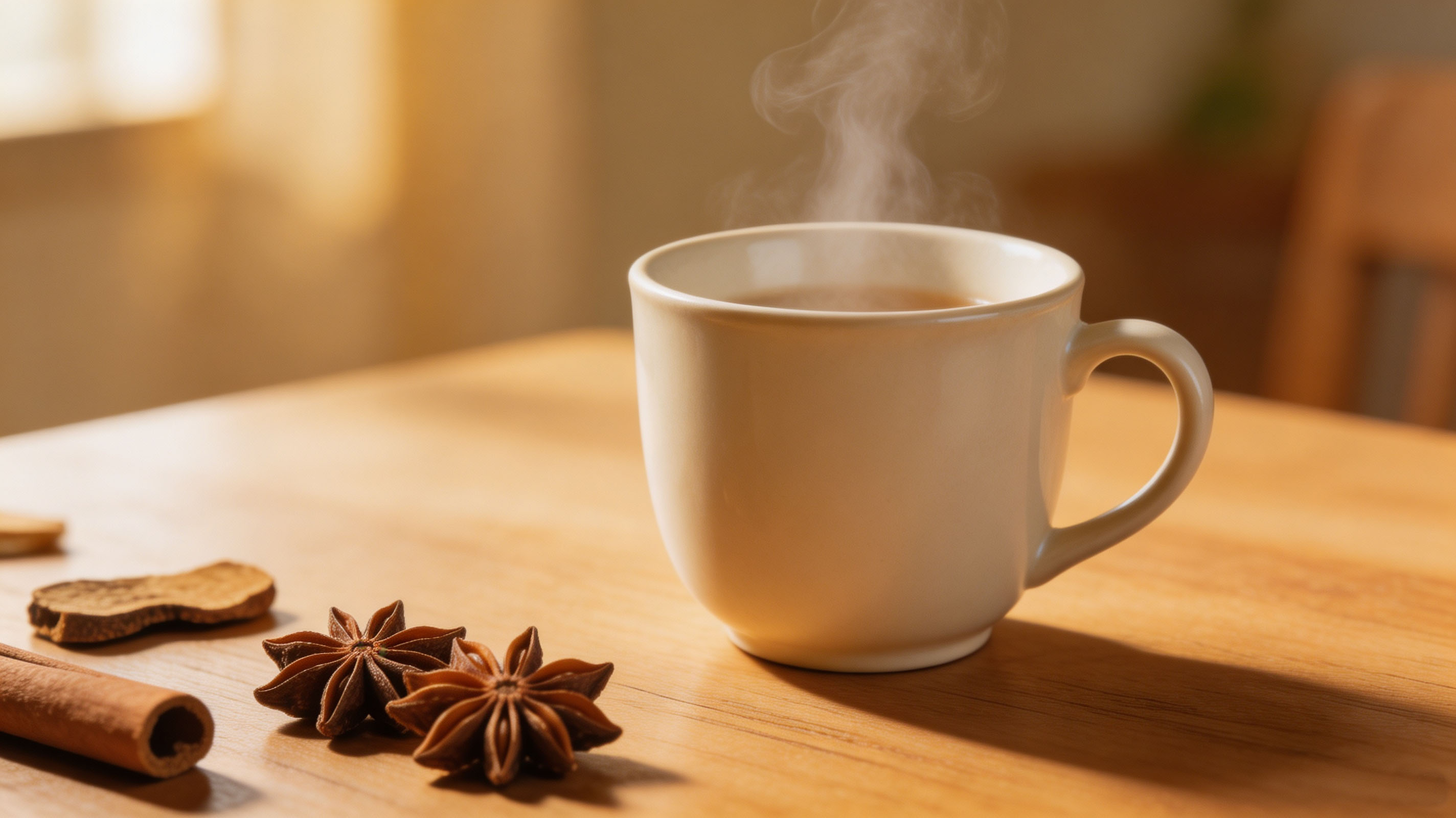
Warm, aromatic, and deeply soothing — licorice star anise tea is a traditional two-ingredient herbal brew with roots in Chinese folk culture. The naturally sweet licorice root meets the bold, spicy-sweet star anise in a simple infusion that has long been enjoyed as a warming winter drink. Here is everything you need to know: the recipe, the traditional story behind each ingredient, and a few important safety notes.
How to Make Licorice Star Anise Tea
Ingredients
- 3 g dried licorice root (甘草, Glycyrrhiza uralensis)
- 6 star anise pods (八角茴香, Illicium verum)
- 2 cups (about 500 ml) of water — adjust to taste
Instructions
- Rinse the licorice root and star anise pods briefly under clean water.
- Place both ingredients in a small pot and add the water.
- Bring to a boil, then reduce to a gentle simmer and cook for 20 minutes.
- Strain into a cup and drink warm.
Traditional Uses
In Chinese folk tradition, this tea has long been enjoyed as a warming winter brew (暖身驱寒) — a comforting everyday drink for cold weather. These are traditional customs passed down through experience, not proven medical effects.
Star Anise: Far More Than a Kitchen Spice
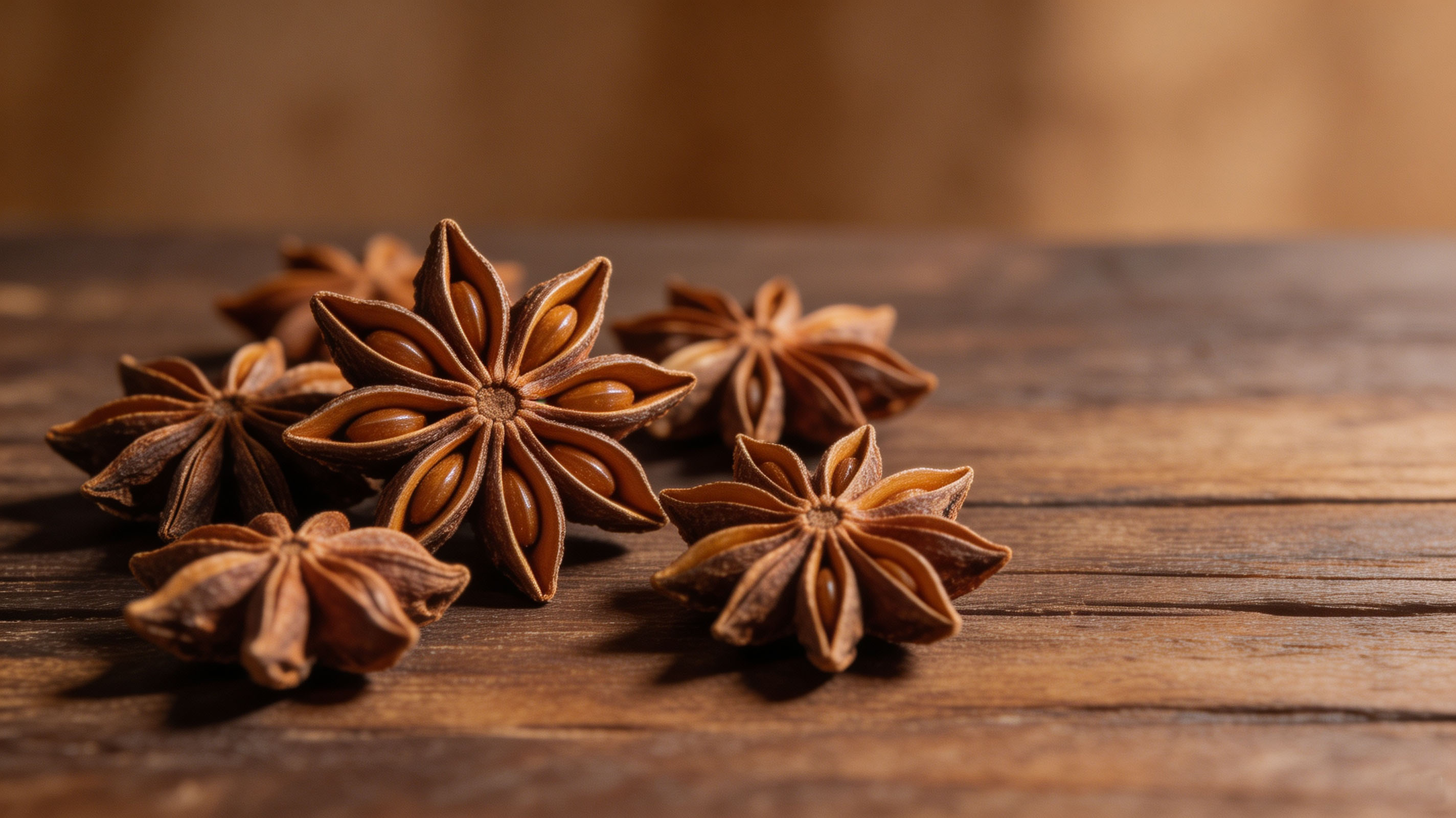
- A warming spice in tradition. In traditional Chinese medicine theory, star anise is considered warming in nature and has long been valued in cold seasons for general comfort (traditional view, for reference only).
- A cousin of fennel. There are two types of anise — small anise (fennel seeds) and large anise (star anise) — with similar culinary uses. The formal name of star anise is 八角茴香 (Illicium verum).
- Officially recognized. Star anise is an herbal ingredient formally recorded in the Chinese Pharmacopoeia and documented across centuries of Chinese herbal literature.
- The "big spice" of the Chinese kitchen. Called 大料 (dà liào) in Chinese, it is essential for braising, stewing, frying, roasting, curing, and marinating — in both meat and vegetable dishes.
- A natural flavor booster. Its distinctive sweet, resinous aroma removes fishy odors, cuts through grease, and brightens flavor. It is a key ingredient in five-spice powder and the thirteen-spice blend.
- A clever oil trick. Soak star anise in cooking oil to help keep the oil fresh and give stir-fried dishes a rich, meaty aroma.
Licorice Root: A Traditional Everyday Ingredient
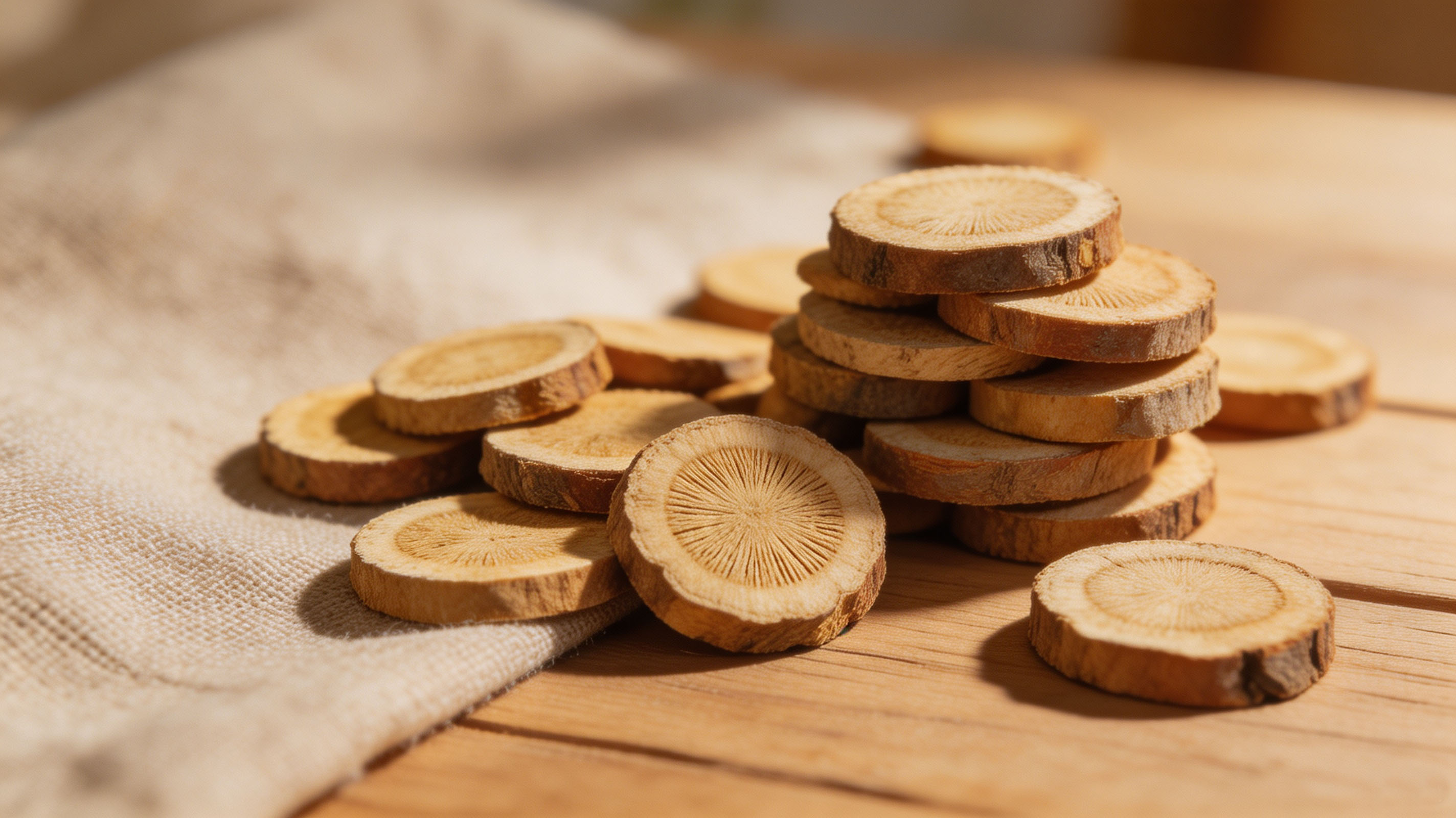
- Traditional uses. In folk tradition, licorice root has long been used to make gentle everyday drinks and skincare pairings, both taken internally and applied externally.
- Common pairings. Licorice is often combined with honeysuckle to make honeysuckle-licorice tea (银花甘草茶), and licorice extract is a familiar ingredient in soothing balms used in everyday skincare routines (traditional folk practices, for reference only).
Safety Notes & Disclaimer
- This article is for informational purposes only and is not medical advice. Consult a qualified healthcare provider before use — especially if you are pregnant, breastfeeding, or managing a health condition.
- Licorice: avoid large or long-term doses if you have high blood pressure, low potassium, kidney disease, or heart conditions.
- Star anise: always use culinary-grade Chinese star anise (Illicium verum). Japanese star anise (Illicium anisatum) is toxic and must never be consumed.
- Herbal teas are everyday wellness drinks, not substitutes for medical treatment.
Frequently Asked Questions
Can I drink licorice star anise tea every day?
Occasional enjoyment is generally fine for most healthy adults. However, daily long-term use is not recommended, mainly because of the licorice — see the safety notes above.
Who should be cautious with this tea?
People with high blood pressure, low potassium, kidney disease, or heart conditions should be cautious with licorice, as should pregnant women. When in doubt, check with your doctor or a qualified herbalist before making it a regular habit.