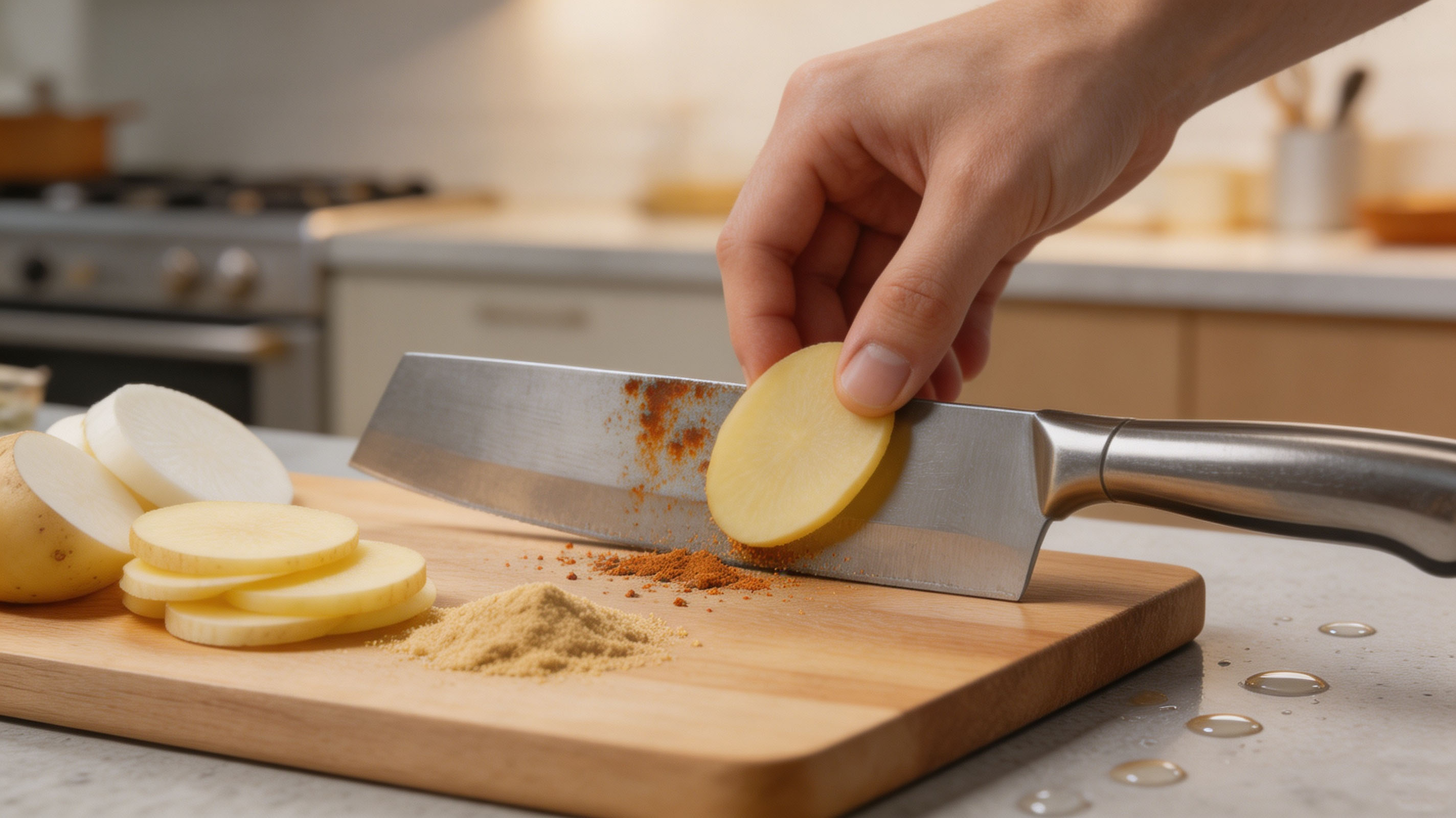
A rusty kitchen knife looks like a lost cause — orange flakes, rough edges, and the fear that your favorite blade has seen better days. But before you spend money on chemical rust removers, there is a cheap, natural, food-safe trick your grandma would approve of: rub the blade with a potato or radish slice dipped in a little fine sand. In a few minutes, the rust loosens and wipes away, and the knife is back on duty.
In this guide, we explain how to remove rust from a kitchen knife using this simple method, why it actually works, and how to keep the rust from ever coming back.
What You Will Need
- 1 raw potato or 1 white radish (daikon works great)
- A pinch of fine sand (clean, sifted, no grit chunks) — table salt or baking soda also works
- A soft cloth or paper towel
- Warm water and a drop of dish soap (to finish)
- A clean, dry towel
Step-by-Step: The Potato & Sand Method
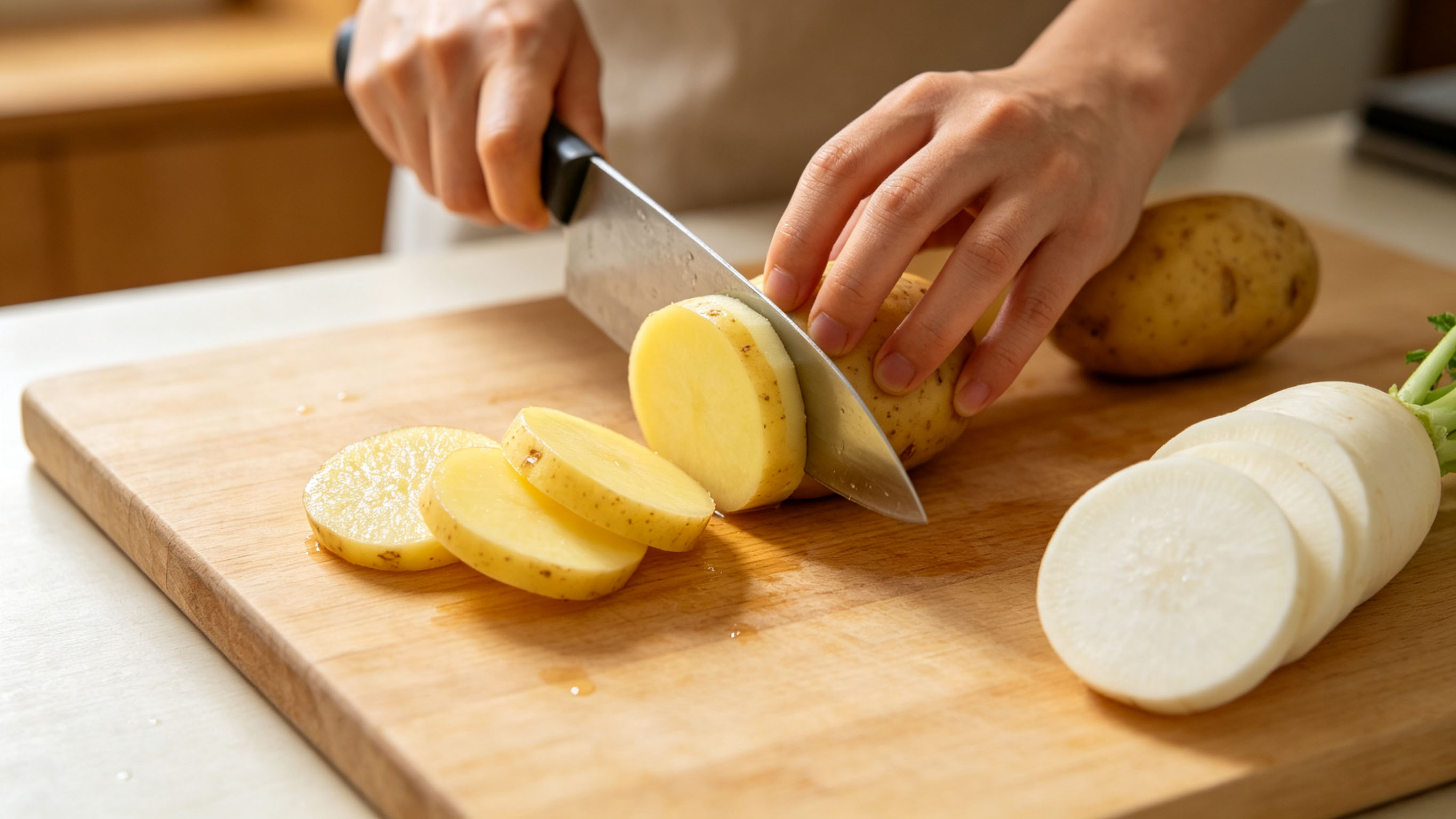
- Prepare the slice. Cut a thumb-thick slice of raw potato or radish. A fresh cut face releases the juice that does the work, so slice right before scrubbing.
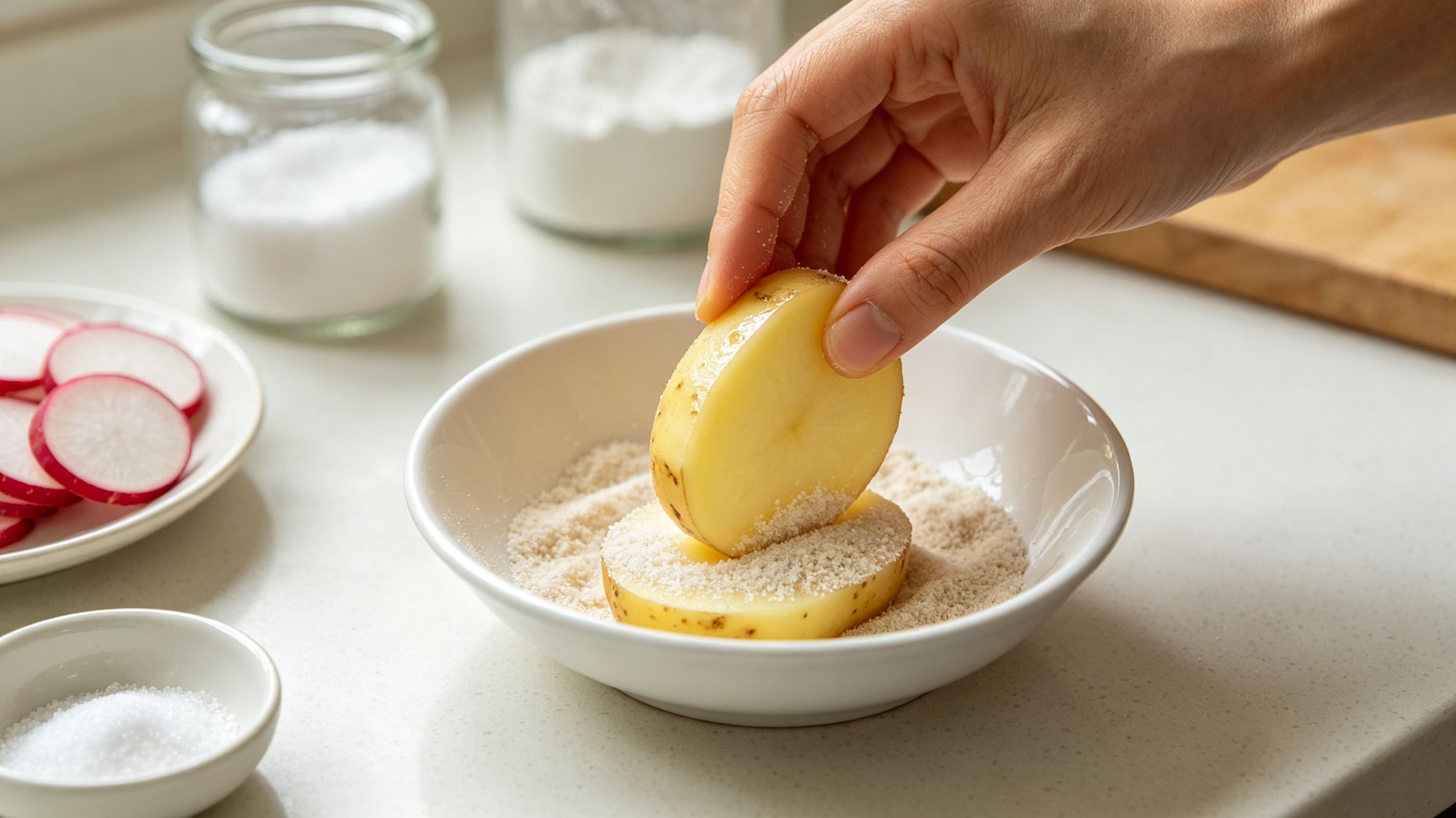
- Dip it in fine sand. Press the cut face of the slice into a small bowl of fine sand (or sprinkle a little salt/baking soda on it). The sand acts as a gentle abrasive.
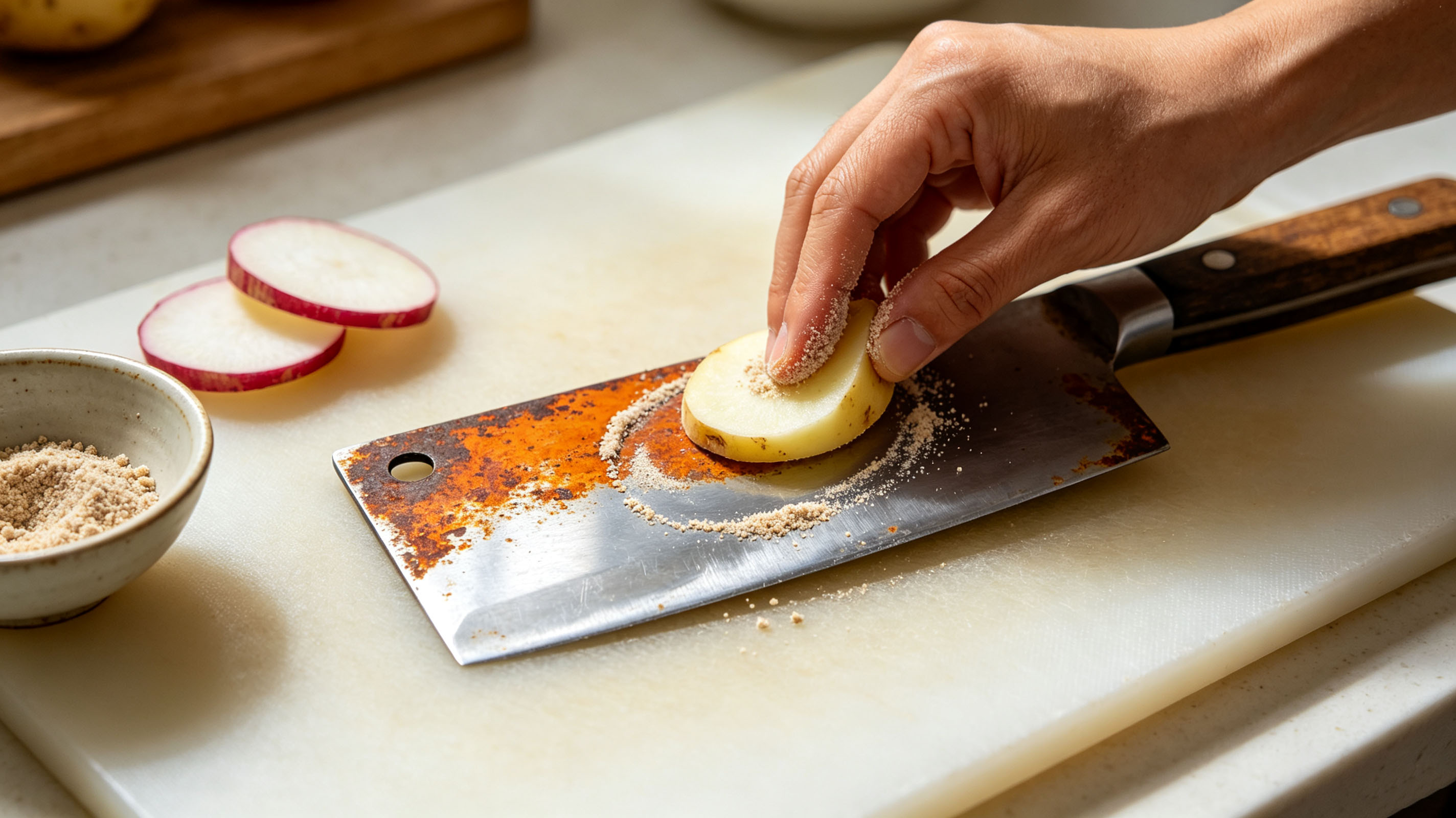
- Scrub the rusty spots. Rub the sanded slice over the rust in small, firm circular motions. Focus on the worst spots and work the edge carefully. For stubborn stains, cut a fresh slice and repeat.
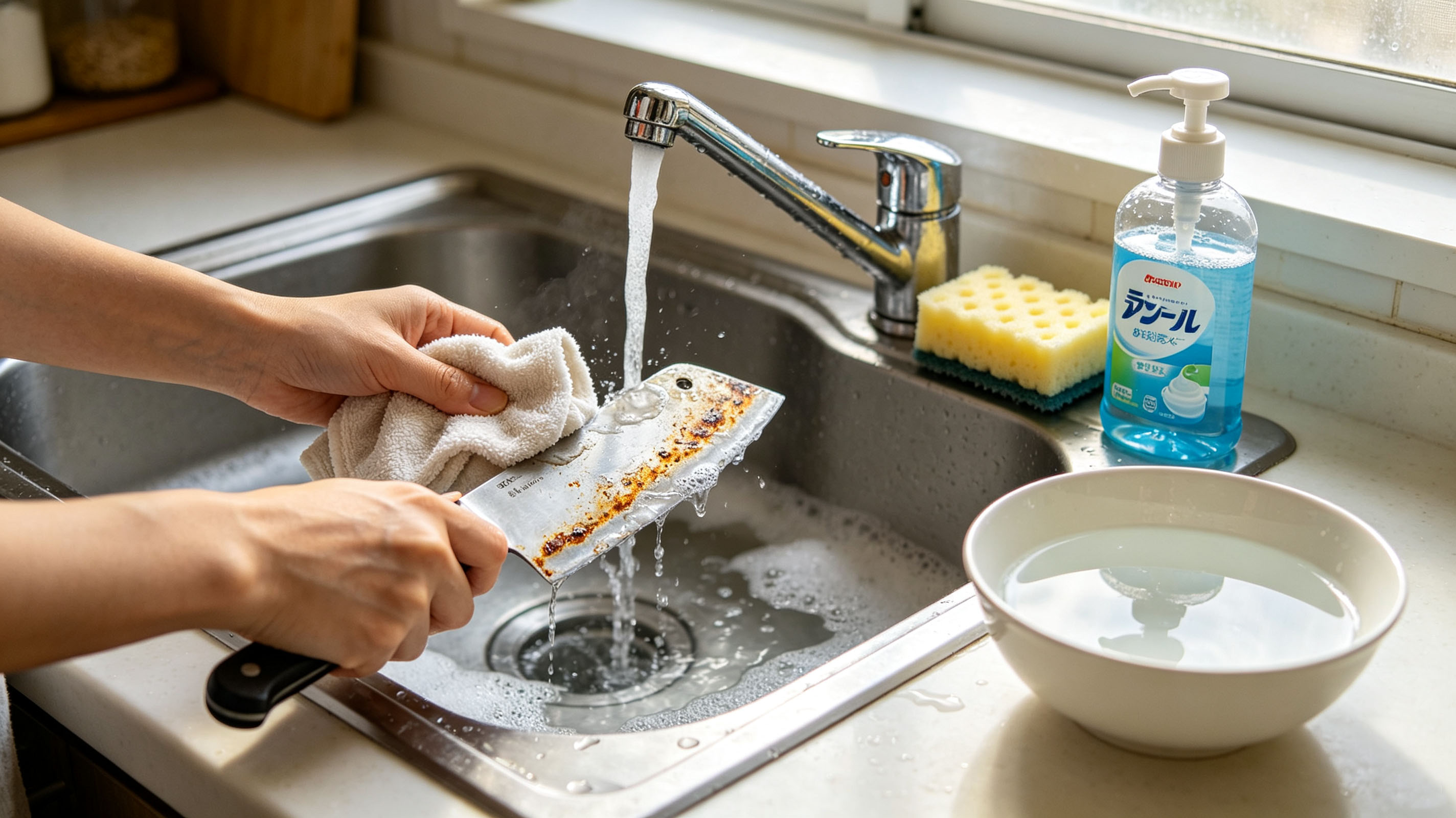
- Wipe and rinse. Once the rust loosens, wipe the blade with a soft cloth, then rinse it in warm, soapy water to remove every trace of sand and juice.
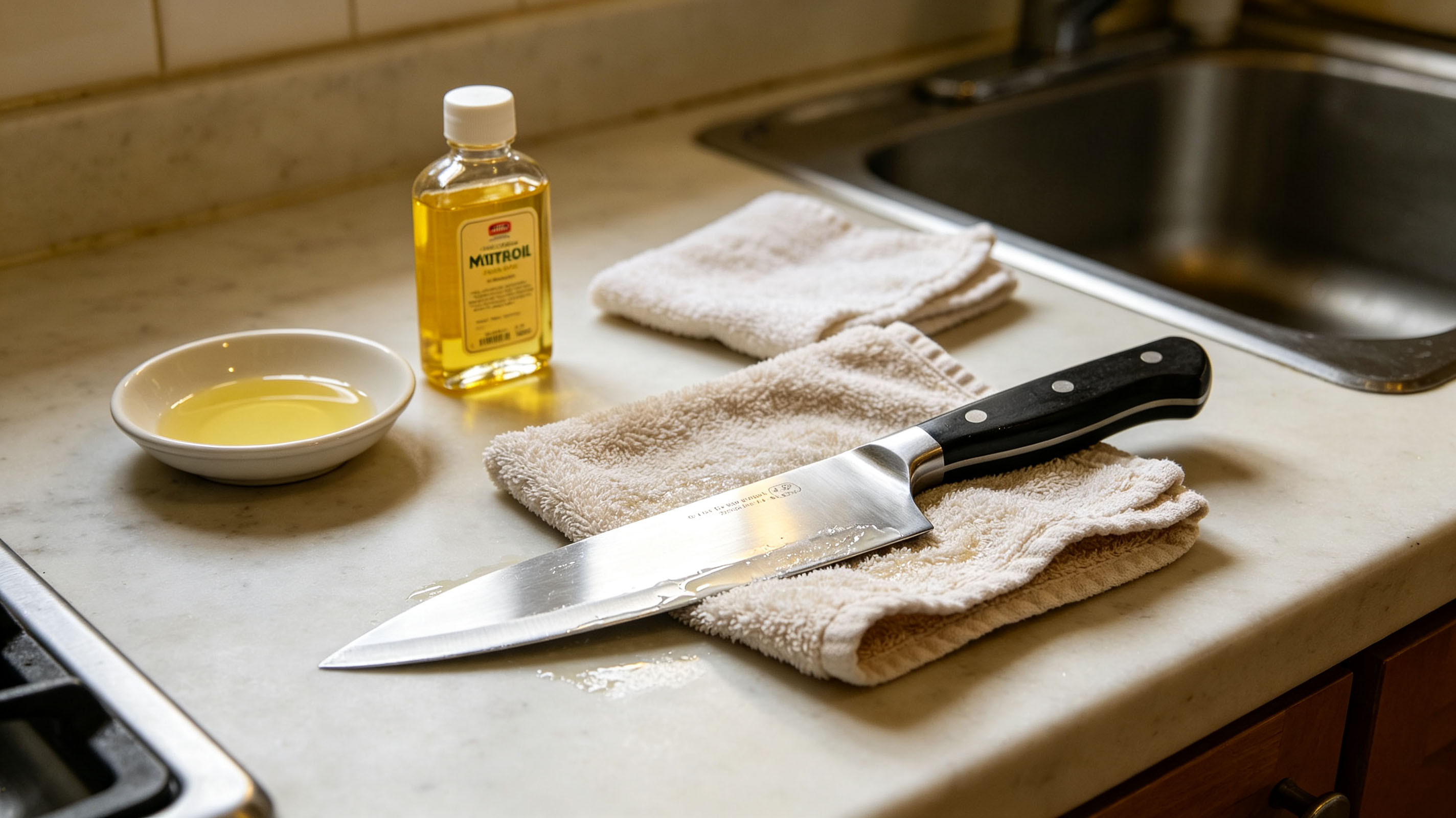
- Dry completely and oil. Dry the knife with a clean towel — moisture is rust's best friend. For extra protection, rub the blade with a food-safe mineral oil or a drop of cooking oil and wipe off the excess.
Why This Method Works
This is not kitchen folklore — there is real chemistry behind it. Rust is iron oxide, and raw potatoes (and radishes) naturally contain oxalic acid. When the juice touches the rust, the oxalic acid reacts with the iron oxide through a process called chelation, loosening the bond between the rust and the steel so it lifts off easily. The fine sand adds just enough friction to physically scrub the loosened oxide away, while the natural acid keeps the treatment mild enough that it won't damage the blade the way harsh chemical strippers can.
Pro Tips for a Lasting Finish
- Use this for light to moderate rust. For deep pitting or heavy corrosion, a dedicated rust-removal block or professional service is a safer choice.
- Test on a small spot first if your knife has a special finish or coating.
- Never put good knives in the dishwasher. The hot, moist cycle is one of the fastest ways to create rust.
- Dry knives right after washing and store them in a dry spot — a knife block or magnetic strip that allows air circulation is ideal.
- Oil regularly. A thin film of food-safe oil keeps moisture off the steel and stops rust before it starts.
Frequently Asked Questions
Is the potato method safe for expensive knives?
Yes, for light surface rust it is gentle and food-safe. The natural acids are mild, and the fine sand is far less aggressive than steel wool. Just keep the pressure light and rinse thoroughly afterward.
Can I use salt or baking soda instead of sand?
Absolutely. Table salt or baking soda gives the same gentle abrasive effect and are even easier to find in the kitchen.
Will the rust come back?
Rust always returns if moisture stays on the blade. Drying the knife immediately after use and keeping a light oil film on the steel are the two habits that make rust a thing of the past.
The Bottom Line
A little rust doesn't mean the end of a good knife. With a potato or radish slice, a pinch of fine sand, and about five minutes, you can remove rust from a kitchen knife safely and naturally — no harsh chemicals, no waste, no cost. Clean it, dry it, oil it, and your blade will slice like new for years to come.