Herbal tea · Recipe
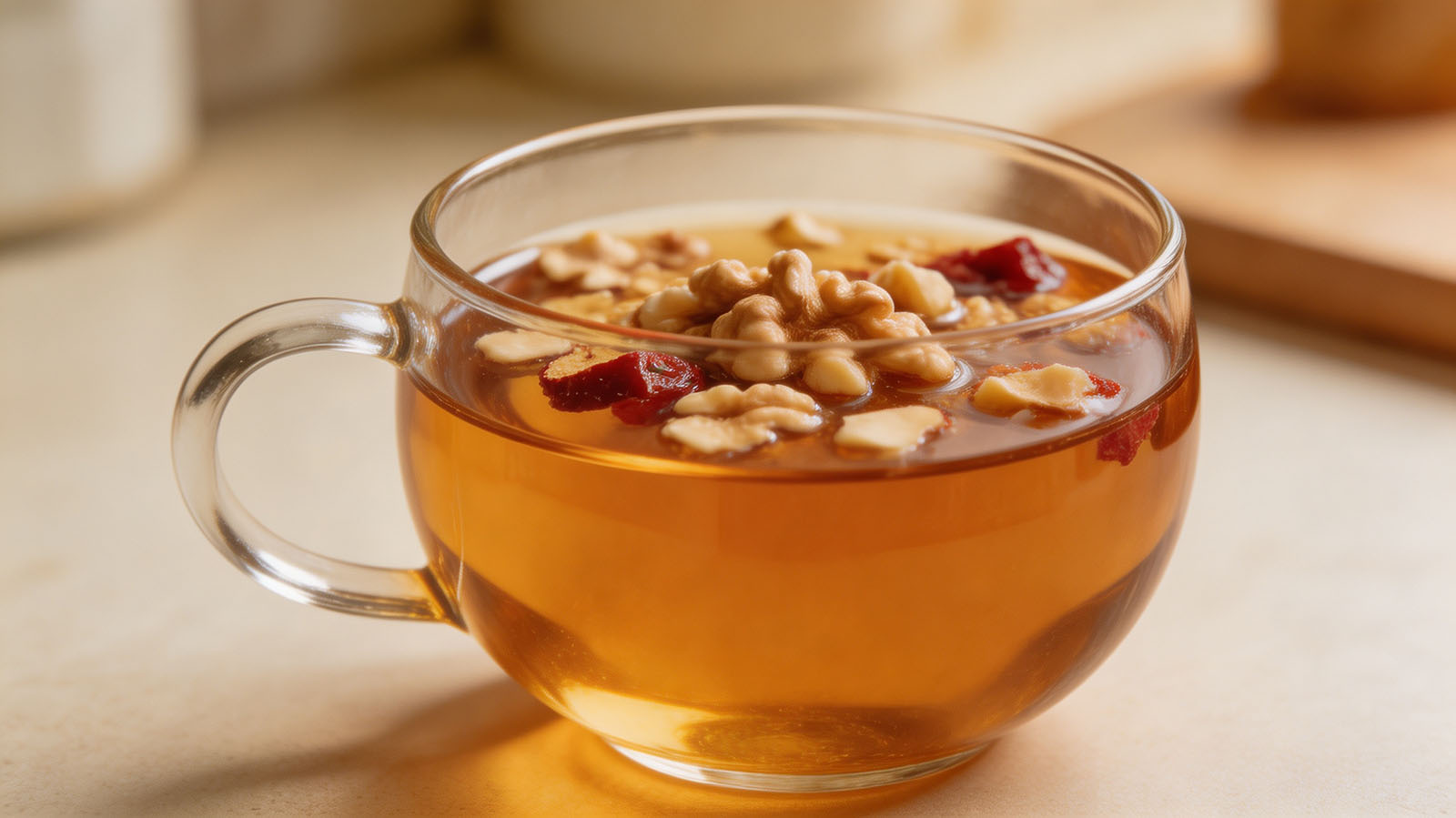
Toast walnuts in a dry pan until they smell like a bakery, chop them, then simmer them with dried hawthorn berries and a spoon of brown sugar. The result is a deep amber cup that tastes nutty first, tart second, and sweet at the end. It is one of the easiest hot drinks to keep in rotation all winter.
In this guide
What hawthorn and walnut tea actually tastes like
If you have never had it, picture this: the tartness of hawthorn arrives first, brown sugar rounds it out, and toasted walnut sits underneath the whole thing. It is not clean and grassy like green tea, and not rich like a latte. The closest comparison for a Western palate is a thin, lightly sweetened nut broth with fruit in it.
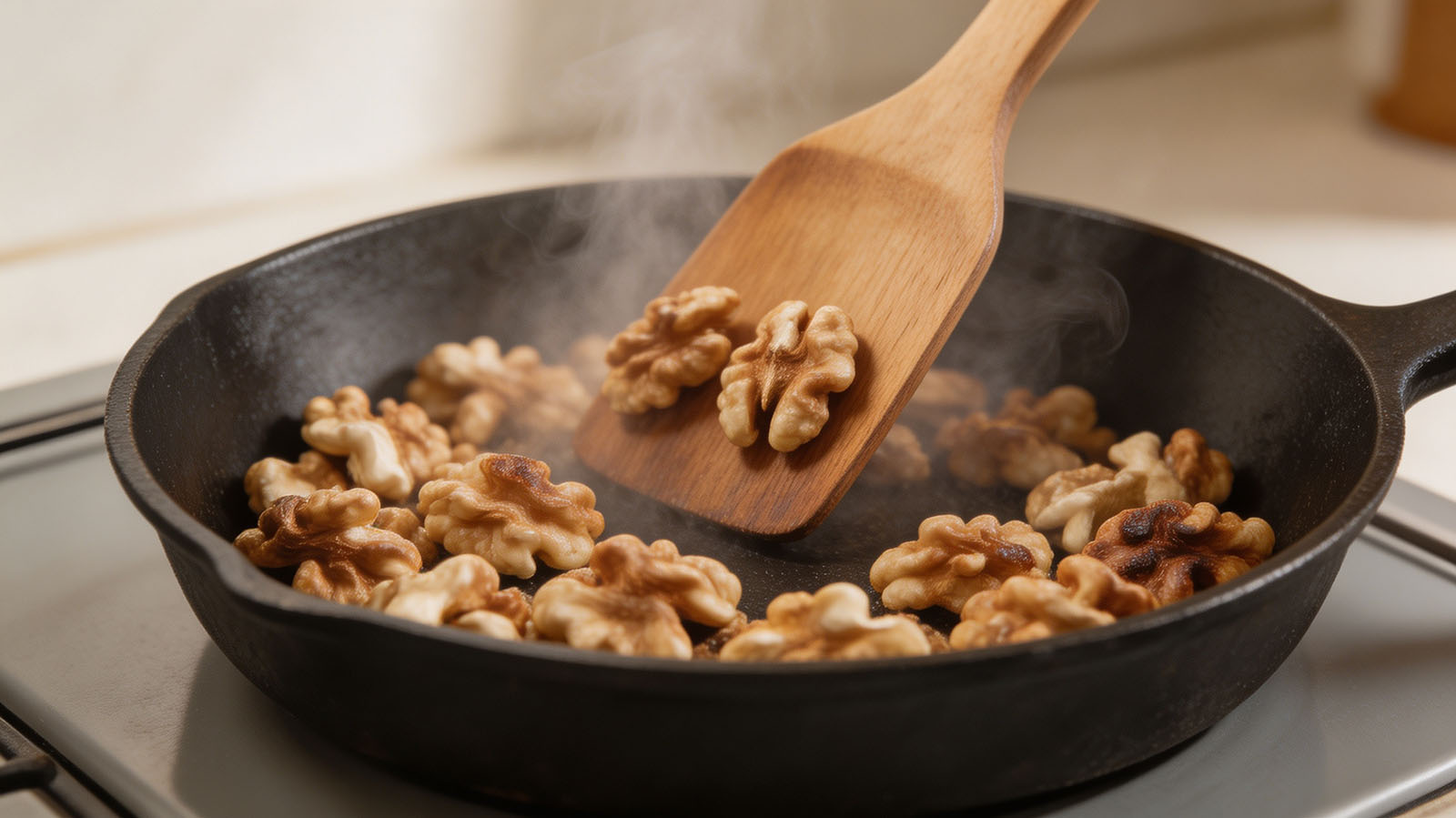
The toasting step matters more than it looks. Raw walnuts dropped straight into the water leave a slightly astringent, papery note from the skins. Toast them gently until they turn fragrant and the oils start to shine, and that harshness mostly disappears while the liquor turns rounder. If you only have time for one thing, make it this.
As for sweetness, 10 grams of brown sugar is about one level tablespoon — enough to taste, not enough to cloy. If you like it tart, cut the sugar in half. If hawthorn is too sour for you, drop the berries to 10 grams instead.
The three ingredients, and what each one brings
Walnuts — 50 g
The body and aroma of the drink. Walnuts are a familiar everyday nut, providing polyunsaturated fats, vitamin E and polyphenols. Toast and chop them so they release flavour quickly.
Hawthorn berries — 15 g
Dried hawthorn slices are sold in Asian groceries, herbal shops and online. They are stable, tart and hold up well to simmering, and contain vitamin C, pectin and flavonoids.
Brown sugar — 10 g
Softens the acidity and deepens both colour and mouthfeel. It carries a little molasses flavour and trace minerals, but nutritionally it is still added sugar — about 2.5 g per cup.
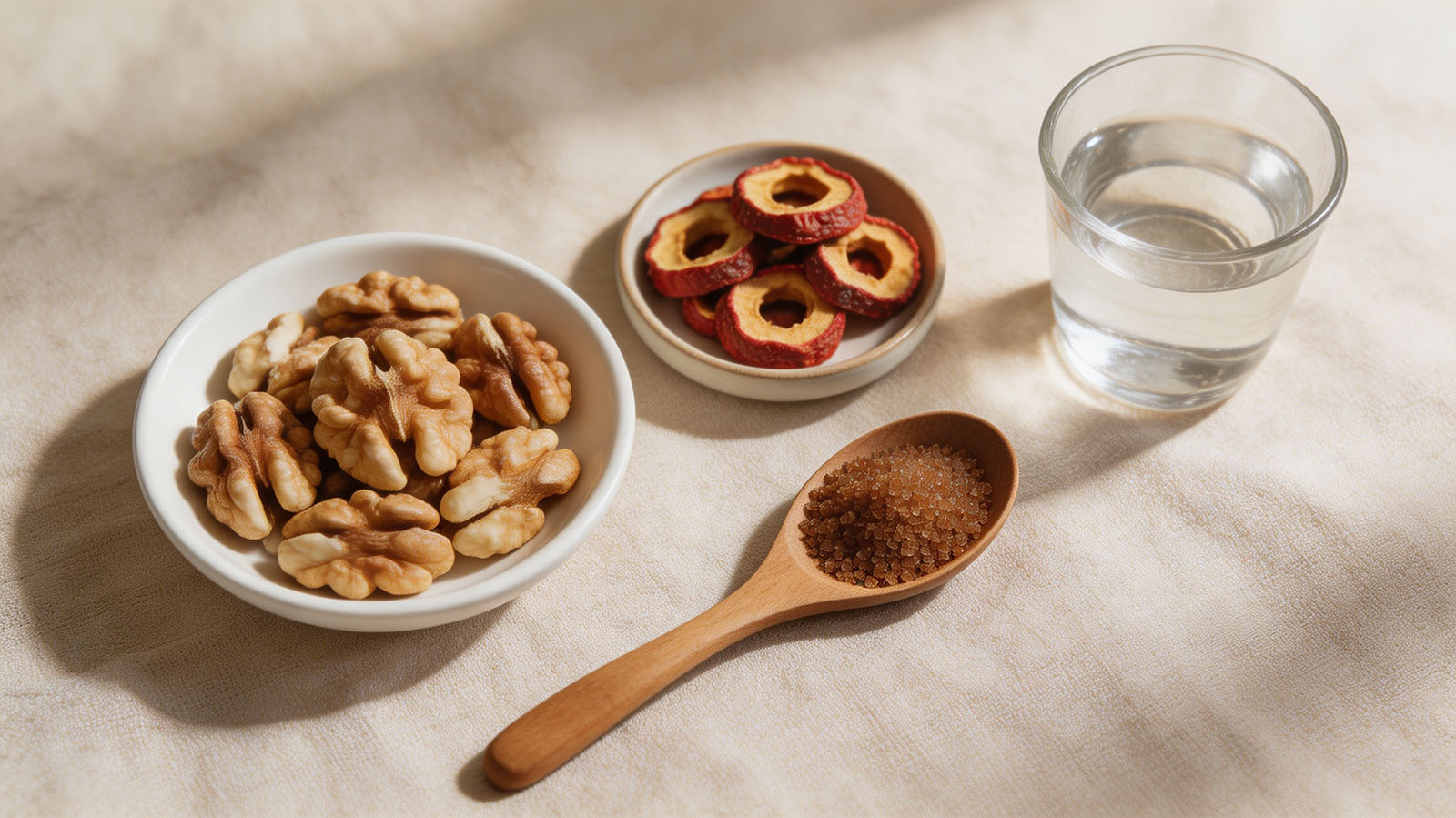
Hawthorn & Walnut Tea — recipe card
| Ingredient | Amount | Notes |
|---|---|---|
| Walnut halves, raw | 50 g (about ½ cup) | You toast them yourself — skip pre-roasted, salted nuts |
| Dried hawthorn berries | 15 g (a small handful) | Or 3–4 fresh hawthorn fruits, pitted |
| Brown sugar | 10 g (1 level tbsp) | Adjust to taste; honey works as a swap |
| Water | 600 ml (2½ cups) | Use 500 ml for a stronger cup |
Note: the original recipe lists only the ratio of the three ingredients. Water volume and cup weights are editorial additions based on standard tea-making practice — adjust freely.
Step-by-step method
- Toast the walnuts, low and slow Put the walnuts in a cold, dry pan — no oil. Set the heat to low and stir constantly for 5–8 minutes. You are looking for a shade darker than raw and a clear nutty smell in the kitchen. Take them off the heat the moment you smell it; over-toasted walnuts turn bitter and there is no fixing that.
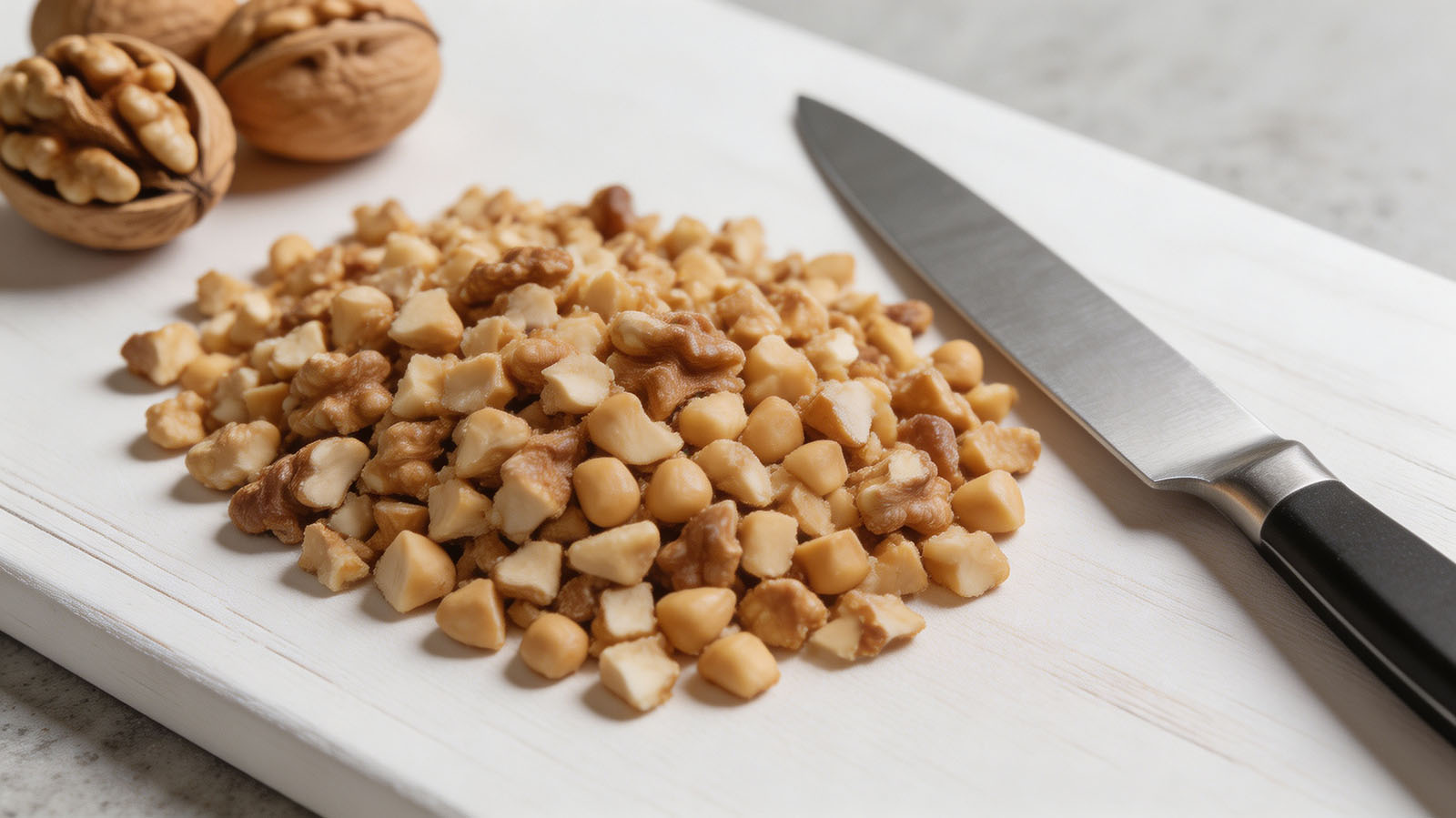
- Chop or pulse into coarse pieces Let them cool completely first — warm walnuts turn to paste. Chop to roughly the size of a pea, or pulse two or three times in a food processor. Coarse is better than fine: you want flavour in the water and texture in the cup.
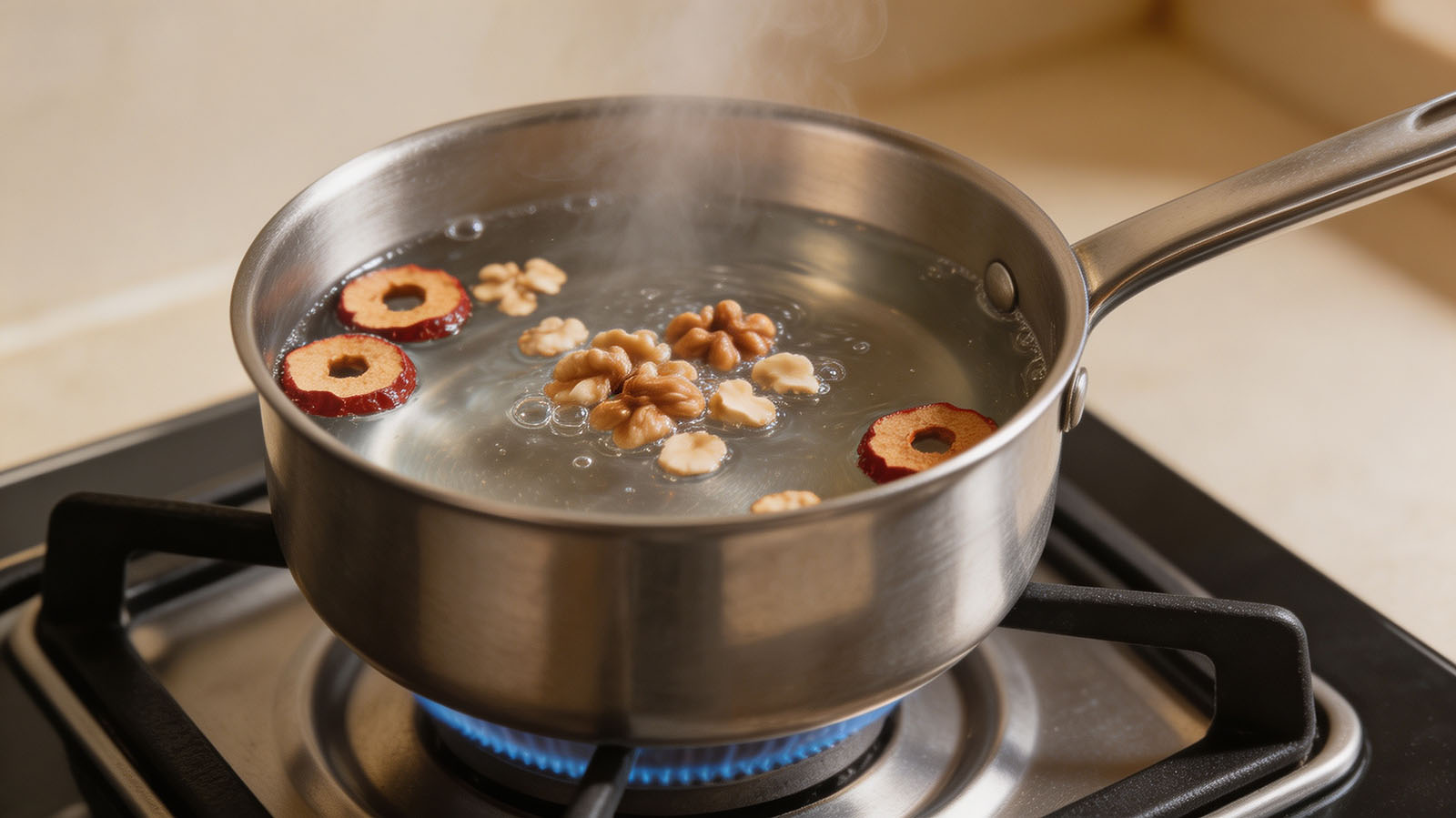
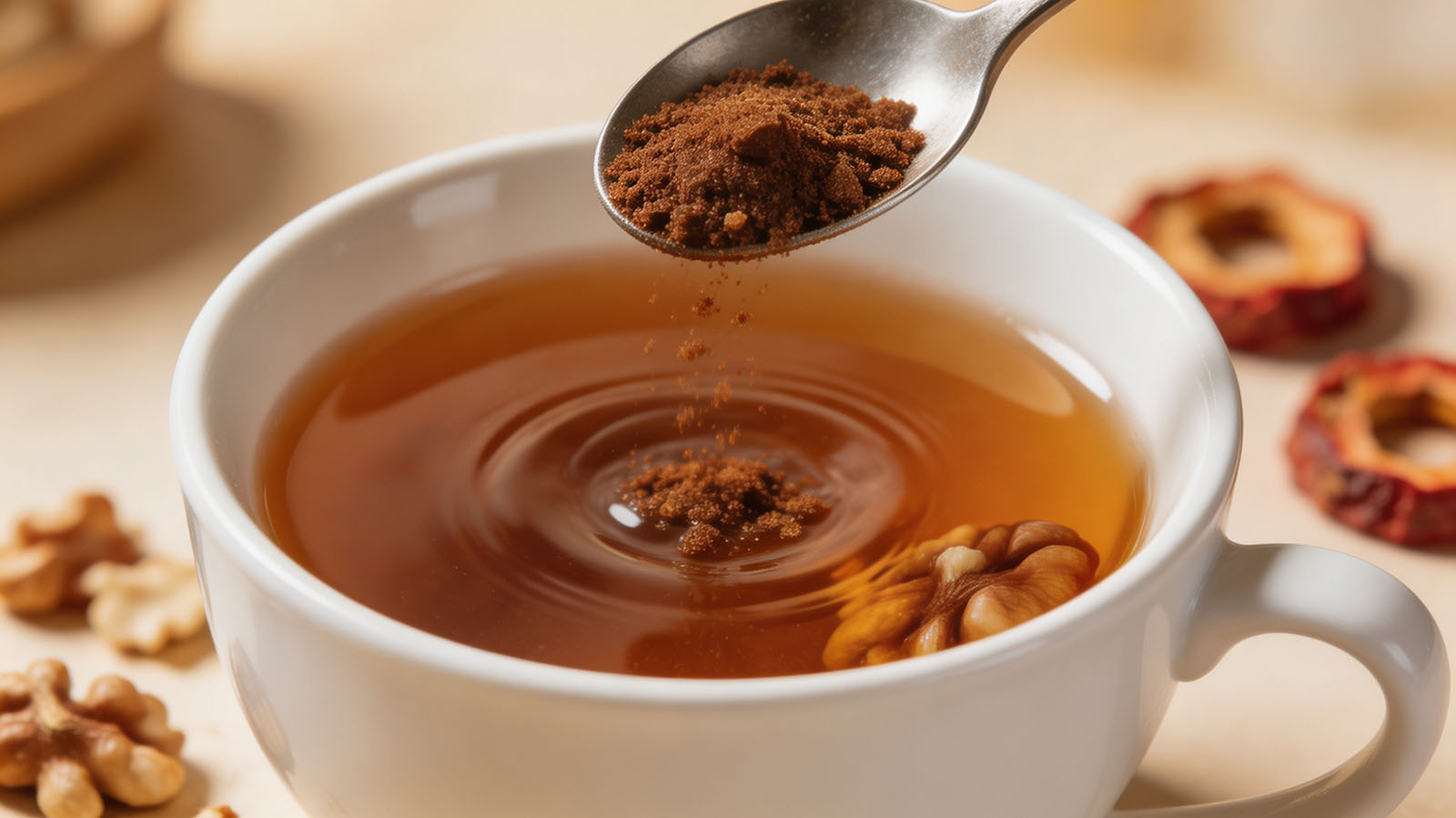
- Simmer with hawthorn and water Add 50 g of the chopped walnuts, the hawthorn berries and 600 ml of water to a small saucepan. Bring to a boil, then drop to a gentle simmer for 8–10 minutes. Stir in the brown sugar and simmer one more minute, then turn off the heat.
- Strain it, or drink it chunky Pour through a mesh strainer for a clear tea, or serve it with the walnut pieces in the cup — that is how it is usually drunk at home. Best within two hours; a thermos keeps it at the right temperature.
Batch-toast the walnuts and keep a jar
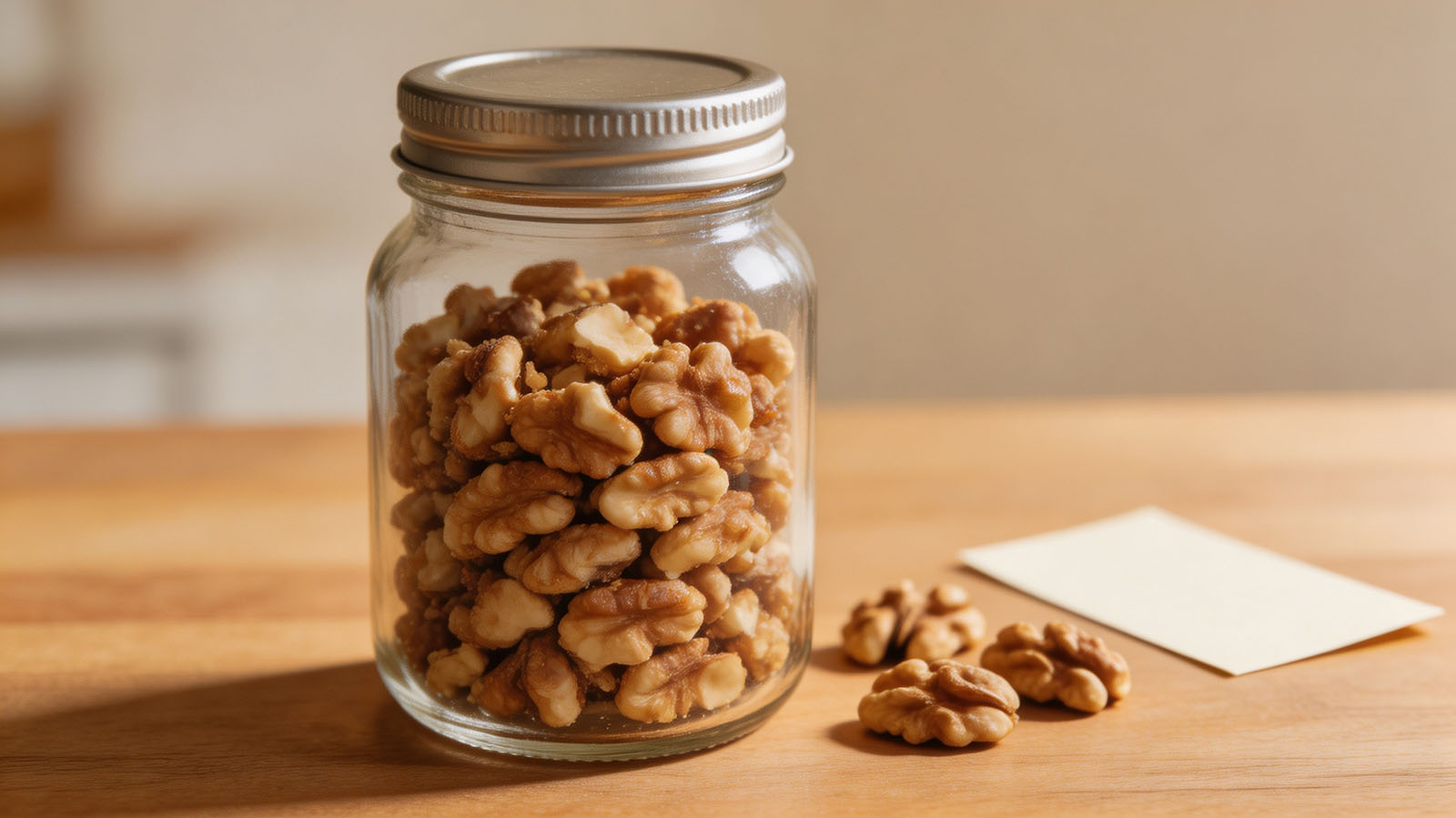
The real time-saver is toasting 300–500 g of walnuts once at the weekend, chopping them, and storing them in a clean jar.
- The jar must be bone dry. Any moisture left inside makes them go soft and stale fast.
- Sealed, in a cool dark cupboard: good for about two weeks. In the fridge: up to a month.
- Scoop out 50 g each time and the whole drink takes about ten minutes.
- If they smell like paint or old crayons, the oils have oxidised — toss the whole jar.
Four easy variations
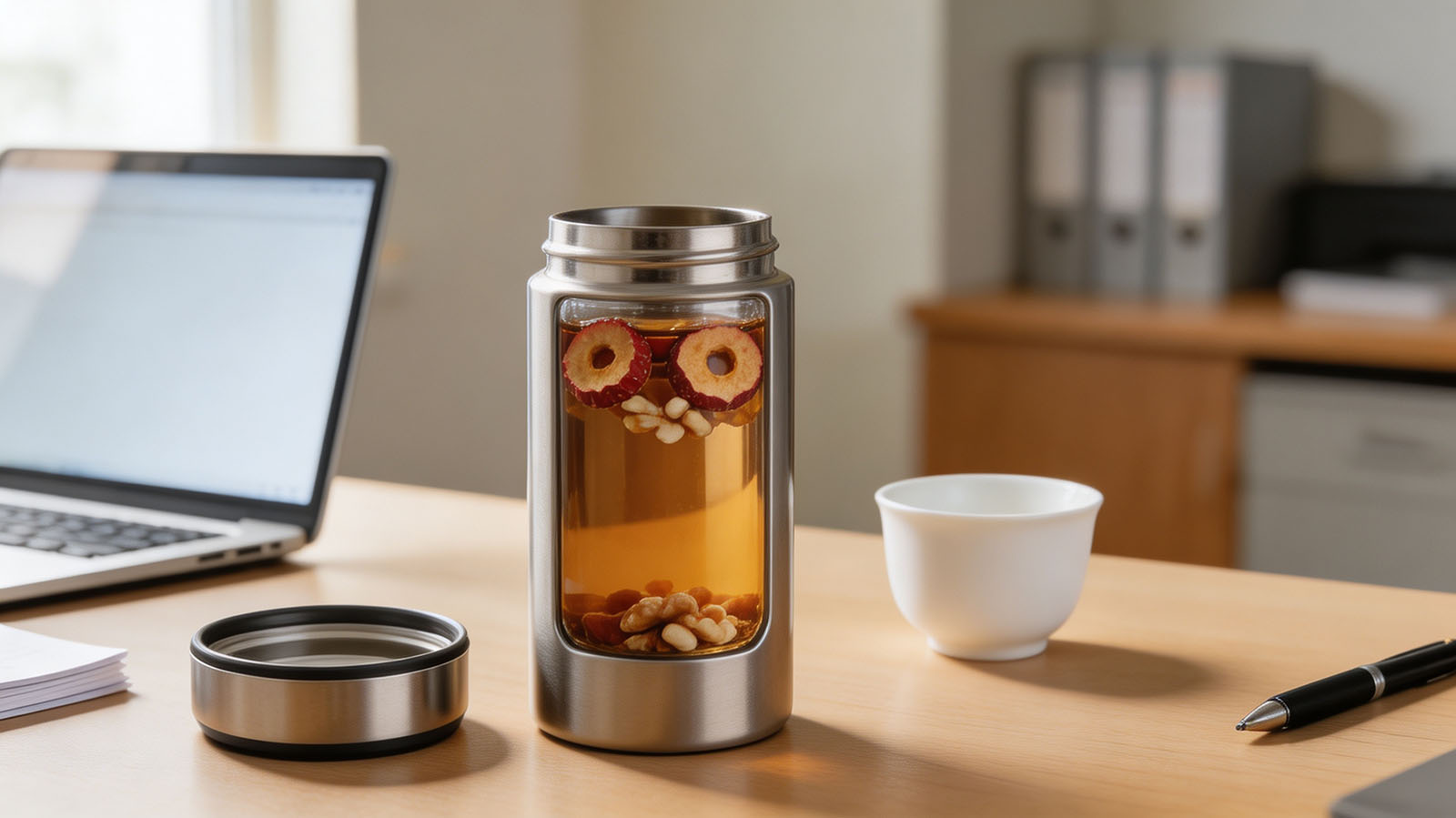
- The desk version (no stove): put the chopped walnuts, hawthorn and sugar in an insulated mug, pour over just-boiled water, close the lid and steep 20 minutes. Less depth than simmering, but zero effort.
- Add dried longan or goji: drop in 5–6 dried longan or a small handful of goji berries while it simmers. They sweeten naturally, so you can halve the brown sugar.
- Blend it into a walnut drink: once cooked, blend the whole pot for 30 seconds. You get a thick, creamy hot beverage that works as part of breakfast rather than alongside it.
- Serve it iced: simmer in 400 ml of water instead of 600 ml, cool, chill, then pour over ice with a slice of lemon.
When to drink it, and how much
Treat it as what it is — a nice hot drink, not a regimen.
- A sensible amount: one cup (about 300 ml) a day. It is not a water replacement.
- After a meal is gentler: hawthorn is acidic. If you get reflux on an empty stomach, wait 30–60 minutes after eating.
- Evenings are fine: it is naturally caffeine-free, so it will not keep you awake — just finish it an hour before bed.
- Drink it the same day: refrigerate for up to 24 hours and bring it back to a boil before drinking again.
Safety first: allergies, medications and who should ask a professional
Two of the three ingredients here come with real cautions. Please read this section before you brew.
- Tree nut allergy — walnuts are a major allergen. If you have a tree nut allergy, do not drink this and do not substitute another nut to "test it".
- Hawthorn can interact with medications. Hawthorn is known to interact with certain blood pressure drugs, blood thinners and antiplatelet medicines, and some cardiovascular medications. If you take any prescription medicine, ask your doctor or pharmacist first.
- Pregnancy and breastfeeding: hawthorn is generally treated with caution in pregnancy. Check with your obstetric provider before drinking it.
- Diabetes or carb counting: the brown sugar here is added sugar and needs to fit inside your daily total.
- Reflux, gastritis or ulcers: the acidity of hawthorn can make symptoms worse.
- Watching calories: 50 g of walnuts is a substantial amount of fat and energy. Balance it against the rest of your day.
Frequently asked questions
Do I really have to toast the walnuts?
No, but you will taste the difference. Toasting deepens the aroma and removes the papery bitterness from the skins, which makes the whole cup smoother. Short on time? Dry-heat the chopped walnuts for two minutes before adding the water — that gets you part of the way there.
Where do I buy dried hawthorn berries?
Asian supermarkets (look for shan zha), herbal and apothecary shops, and most major online marketplaces. They are sold as thin dried slices and keep for a year or more in a sealed jar away from light.
Can I use fresh hawthorn fruit instead of dried?
Yes. Wash them, cut them open and remove the seeds — three or four fruits is roughly equivalent. Fresh hawthorn is sharper, so you may want a little more sweetener.
Can I swap the brown sugar for honey or maple syrup?
Both work. Let the tea cool until it is just warm to the touch (roughly below 60°C / 140°F) before stirring honey in, so you keep its flavour. Start with one teaspoon and taste.
My tea turned out bitter. What went wrong?
Usually one of two things: the walnuts were toasted too hot (look for dark colour and a burnt smell), or the walnut skins were left in and over-extracted. Toast lower and slower next time, and if you are very sensitive to bitterness, soak the toasted walnuts in warm water for ten minutes and rub off some of the skins before simmering.
Is this safe for children?
First rule out a tree nut allergy — that is non-negotiable. Beyond that, this is a sweetened drink, so treat it as an occasional treat rather than a daily habit. For children under three, check with your paediatrician first.
Can I make a big batch and keep it in the fridge?
Up to 24 hours, in a sealed container. Reboil it before drinking. The walnut pieces soften and the tartness sharpens as it sits, so most people prefer it fresh.
The bottom line
The appeal of this tea is less about what is in the cup and more about the ten minutes it asks of you. Walnuts and dried fruit are ordinary, decent pantry ingredients; simmering them together beats reaching for a flavoured syrup drink on a cold afternoon. That is the whole pitch — it is a nice thing to make, and it is easy.
Disclaimer: This article is a culinary recipe and general food information. It is not medical advice and is not intended to diagnose, treat, cure or prevent any disease. Nothing here should replace guidance from your doctor, pharmacist or a registered dietitian. Statements about the nutrients in these ingredients describe the foods themselves, not any effect of drinking this tea. If you are pregnant or breastfeeding, take prescription medication, manage a health condition, or have a food allergy, consult a qualified healthcare professional before consuming hawthorn or walnuts.