
Skin Care · Home Cooking
You love everything about cooking — the sizzle, the aroma, the family gathered around the table. The one part nobody loves? The fumes. Here’s how to give your skin the gentle care it deserves.
What Cooking Fumes Do to Your Skin

Every stir-fry sends hot oil vapor into the air — and onto your skin. When oils are heated to high temperatures, compounds called polycyclic aromatic hydrocarbons (PAHs) can form. They are among the pollutants found in cooking smoke, and some are classified as carcinogens by international health agencies.
In one study, PAH levels measured in a kitchen during cooking were compared to sitting in a closed room with dozens of cigarettes burning for hours. In poorly ventilated kitchens, high-heat frying has been measured at PM2.5 concentrations as high as 800 µg/m³ — more than 15 times the recommended indoor air quality guideline.
These particles do not just hang in the air. They land on your face, hands and hair, then mix with sweat and sebum into a thin, stubborn film that plain water simply cannot wash away.
A Comforting Cup, the Old-Fashioned Way
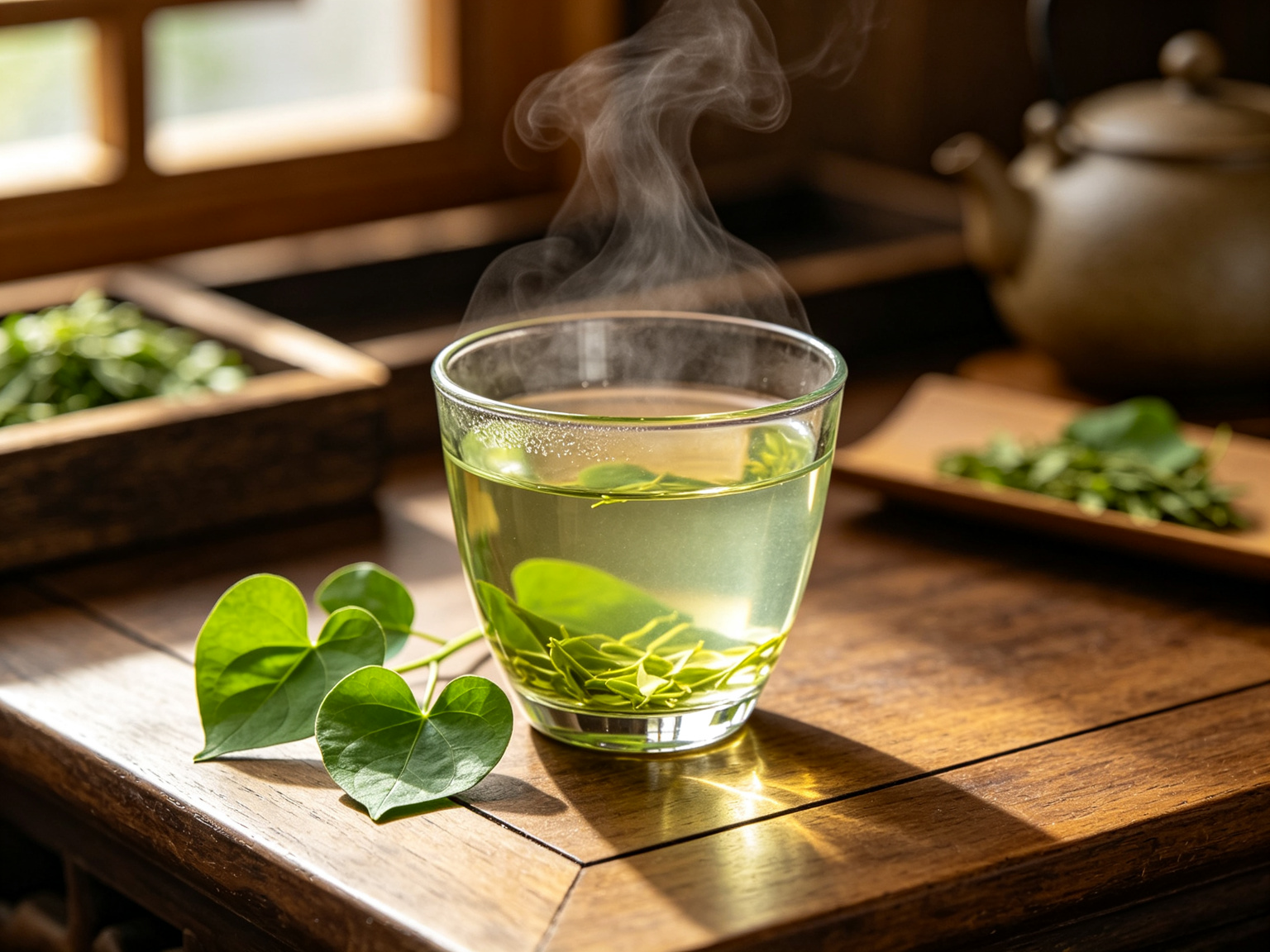
Long before modern cleansers existed, home cooks in China had their own daily rituals — including a cup of tea brewed from houttuynia cordata, known locally as yúxīngcǎo. It is a humble herb with a distinctive aroma, and many cooks keep a pot brewing in the kitchen.
Note: houttuynia tea is a traditional beverage, not a treatment for any condition. Enjoy it as a comforting ritual, and talk to a healthcare professional about any health concerns.
It’s Not Just the Kitchen

Your skin meets pollution all day long — and much of it is oily. Beyond cooking fumes, these everyday pollutants can settle on your skin:
- Car exhaust and industrial emissions
- Indoor dust, haze and road grit
- Waterproof residue from sunscreen, makeup and skincare products
Anything that does not dissolve in water can build up over time. When pores stay congested, skin can start to look dull and feel rough — which is why a simple rinse often is not enough.
Why a Quick Wash Isn’t Enough
Oil and water do not mix — that is why kitchen grease needs a degreaser, and why your face needs a “pre-wash” before cleansing. Think of it like the pre-wash cycle on a washing machine: it loosens oily grime first, so the main wash can finish the job.
Even if you never wear makeup, if you cook, commute or spend time outdoors, an oil-based pre-cleanser can make a real difference to how your skin looks and feels.
How Our Ancestors Cleaned Up

The idea of cleansing with oil is nothing new. In old Chinese opera troupes, performers wore heavy greasepaint that was almost impossible to wash off. The old trick? Massage cooking oil over the face, rest, then wash — a gentle method passed down to protect young, delicate skin. The principle is simple: oil attracts oil.
Plain plant oil had its downsides, though. It needed long, patient massaging to lift makeup, and rinsing it off completely was never easy.
Where Modern Cleansers Go Wrong
Many modern cleansers overcorrect. Heavy emulsifiers break down oil quickly, but used in excess they can also strip away your skin’s natural protective barrier — the thin sebum film that keeps moisture in. When that barrier weakens, skin can feel dry, look shiny, or react with redness and bumps.
And formulas that skip plant oils entirely in favor of mineral oil offer very little benefit to your skin.
The Three-Oil Solution
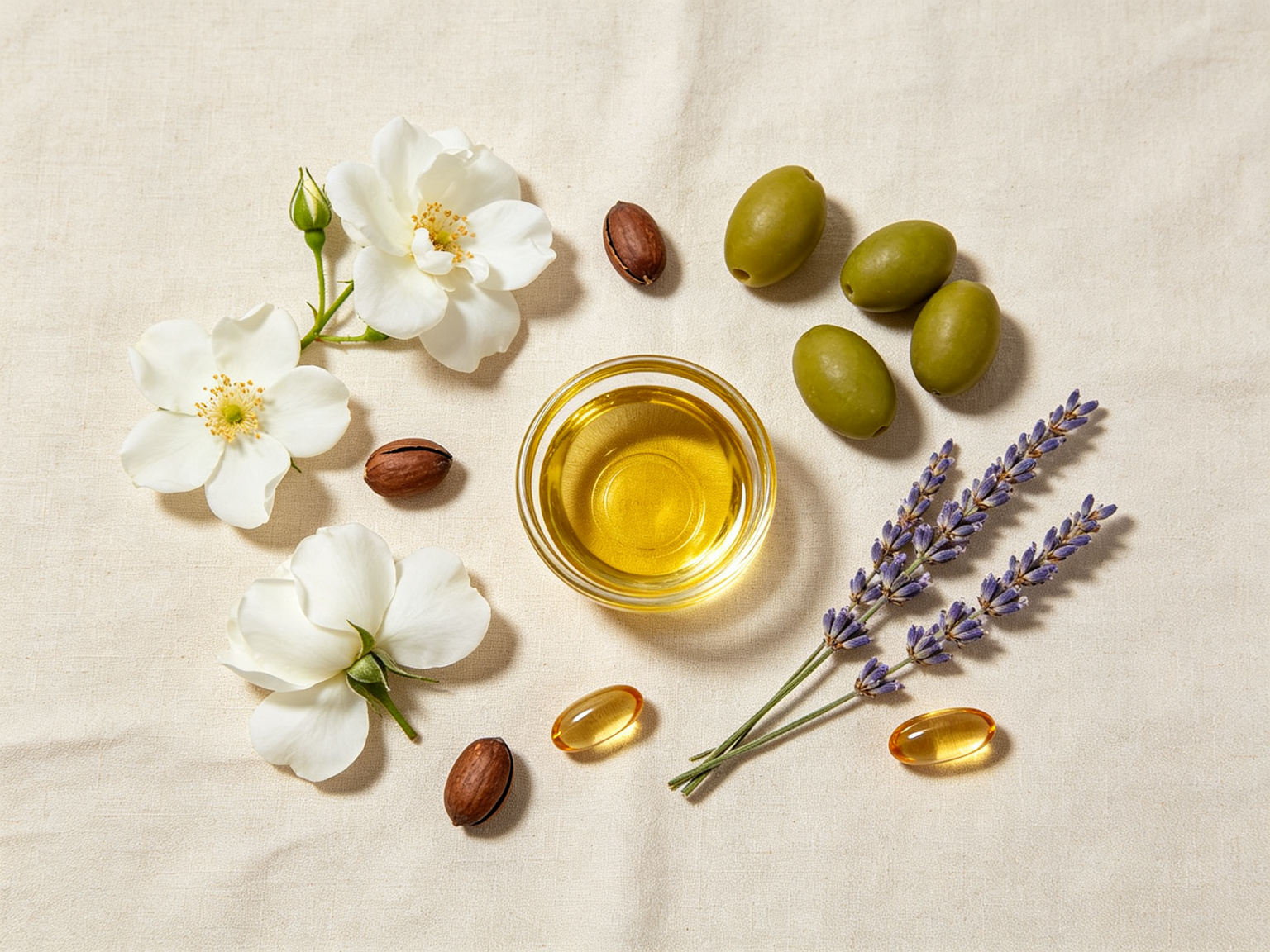
How do you keep the ancient method and fix its flaws? After years of experimenting, one formula stands out: three plant oils, blended with just enough emulsifier to rinse clean — no heaviness, no stripping.
- Camellia oil — its fatty acid profile is remarkably close to your skin’s natural sebum, helping it dissolve grime gently. Camellia oil is also a beloved traditional hair treatment.
- Olive oil — rich in squalene, a skin-loving compound, it leaves skin feeling soft and dewy while it cleanses.
- Lavender oil — supports the cleanse and adds a calming, pleasant aroma.
- A touch of vitamin E (tocopherol) — a natural antioxidant that helps keep the blend fresh.
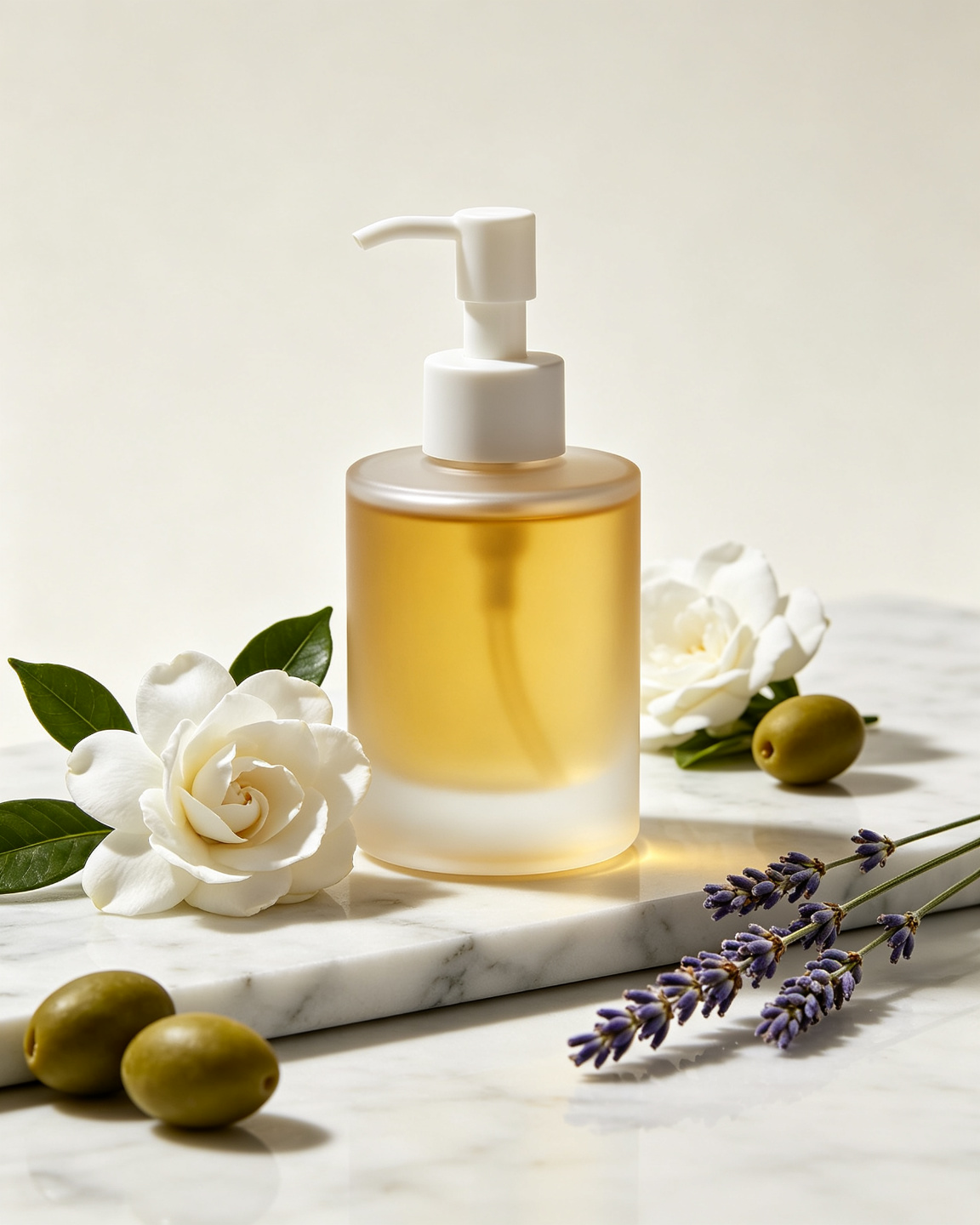
The result: makeup and daily grime wash away, while skin is left feeling soft and comfortable — never tight or squeaky.
Three Simple Tips
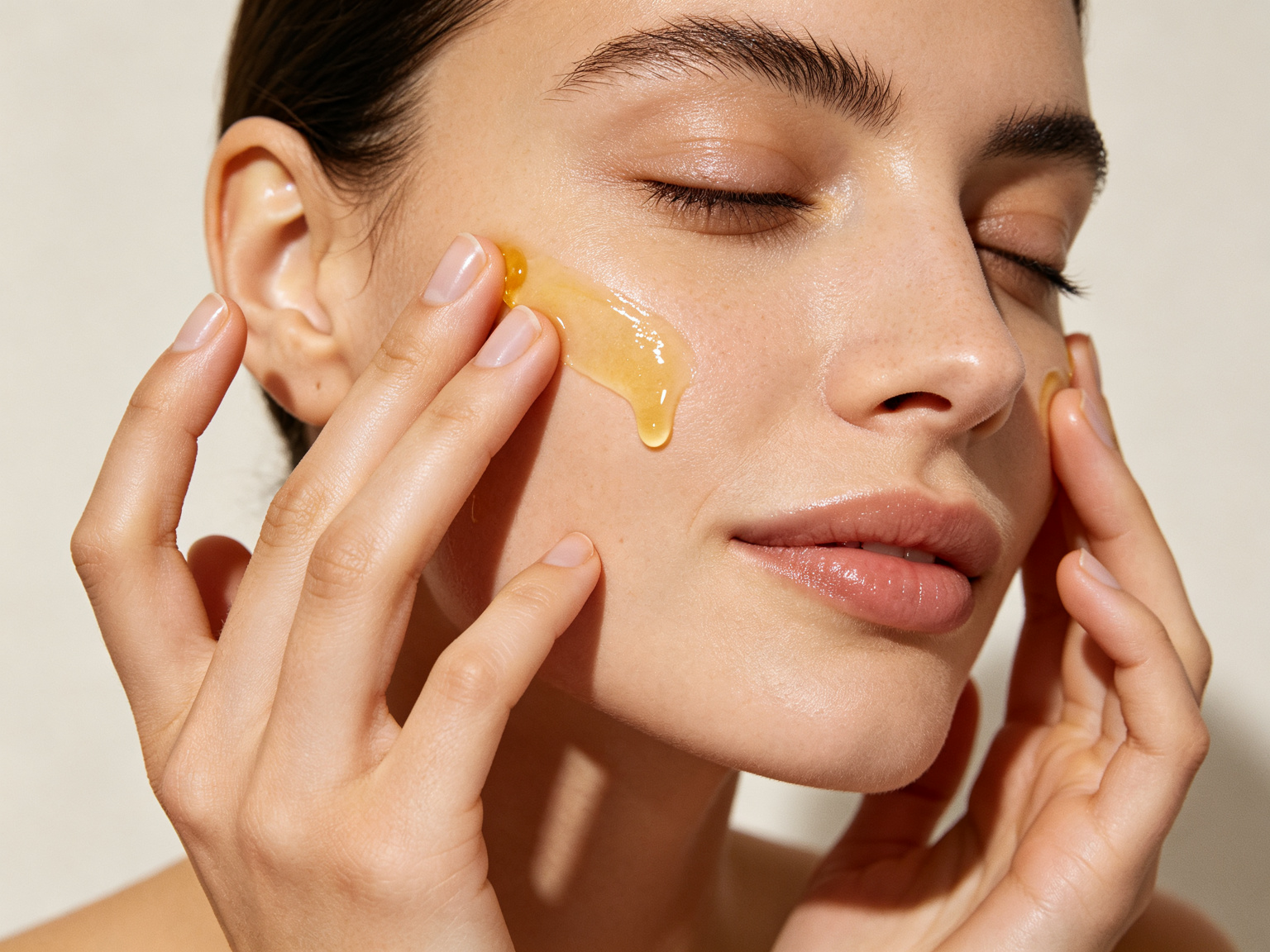
- Start dry. Keep your hands and face dry, apply the oil first, massage gently, then add water.
- Rinse with warm water. For dry skin, that is enough. Oily skin can follow with a gentle cleanser.
- Don’t chase “squeaky clean.” A trace of natural oil left on your skin is a feature, not a bug — it helps keep your barrier happy. If you are prone to breakouts, resist over-cleansing: stripping too much oil can make the imbalance worse.