You may have heard two familiar sayings from East Asian seasonal wellness: spring sorrow and autumn melancholy, alongside spring drowsiness and autumn fatigue. Far from being “just moods,” these phrases describe how the body naturally responds as the year turns — gentle signals that your sleep, food and daily rhythm may need a little extra care.
The good news: most of these feelings are easy to soften with ordinary, everyday habits. This guide walks through what they actually feel like, why they happen, and the quiet foods people reach for at this time of year.
Spring sadness and autumn melancholy are not the same
In traditional seasonal thinking, a wistful feeling that rises in spring is associated with the season of new growth, while a quieter, more withdrawn feeling in autumn is linked to the season of gathering inward.
Importantly, this is not about labeling feelings as “purely psychological.” Traditional wellness has long treated how you feel emotionally as closely tied to how you feel physically — how you sleep, how well you eat, how hard you push yourself.
A common example from wellness circles: a busy high-school student who feels tired, low and unmotivated as autumn arrives, while her family worries she is too thin and not eating well. Rather than writing the mood off as “just stress,” the traditional approach looks at the whole picture — sleep, food, workload and season together.
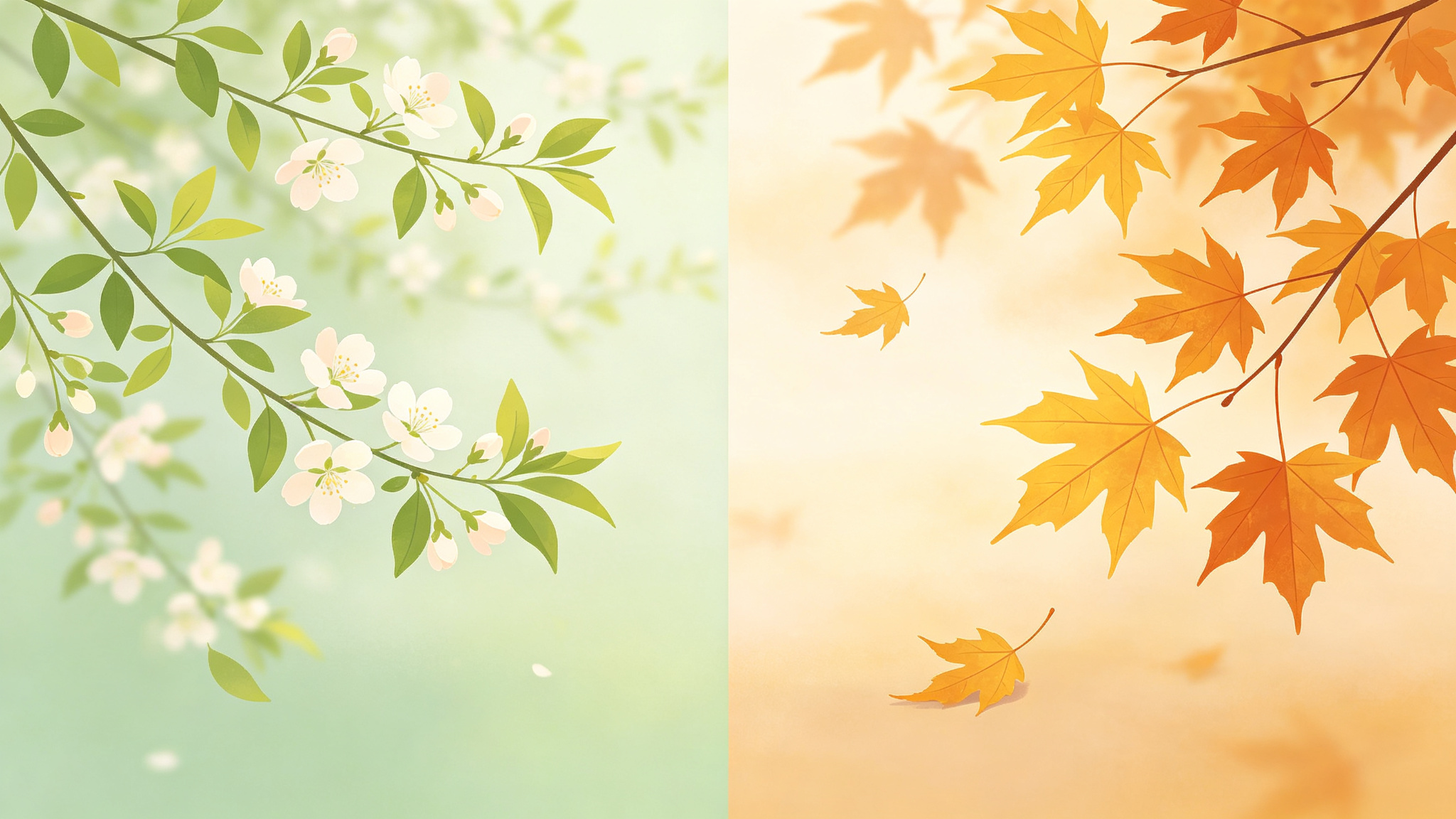
“Spring drowsiness” and “autumn fatigue” feel different
- Drowsiness in spring is mostly about wanting to sleep — and it tends to hit in the afternoon, when your eyes get heavy at the desk.
- Fatigue in autumn is more about the whole body feeling weak and heavy — and it tends to show up in the morning, when getting out of bed feels like effort and you still feel groggy after a full night.
- A classic autumn pattern: you wake up very early, your limbs feel lazy, you long to rest but can’t really fall back asleep.
Why autumn shows up as tiredness — two reasons
1. Your sleep schedule hasn’t followed the season. Autumn asks for a slightly earlier bedtime. If you’re still on a late-summer rhythm, every morning will feel heavier than it should.
2. Your circulation is making its seasonal move. In summer, the body sends more warmth toward the skin surface to cool you down. When cool weather arrives, pores close and warmth and circulation move back inward toward the organs. With less blood reaching the arms and legs, your limbs feel weak and you naturally move more slowly. In the traditional view, autumn tiredness is partly a gentle “hangover” of summer — if summer rest and hydration were thin, autumn fatigue shows up more strongly.
A rustic seasonal snack idea often shared for that heavy-limbed morning: tuck a few schisandra berries (wu wei zi) into a walnut, chew it well, and eat a couple as a snack. It’s offered as an old food tradition, not a prescription.

Autumn-friendly foods to add to your table
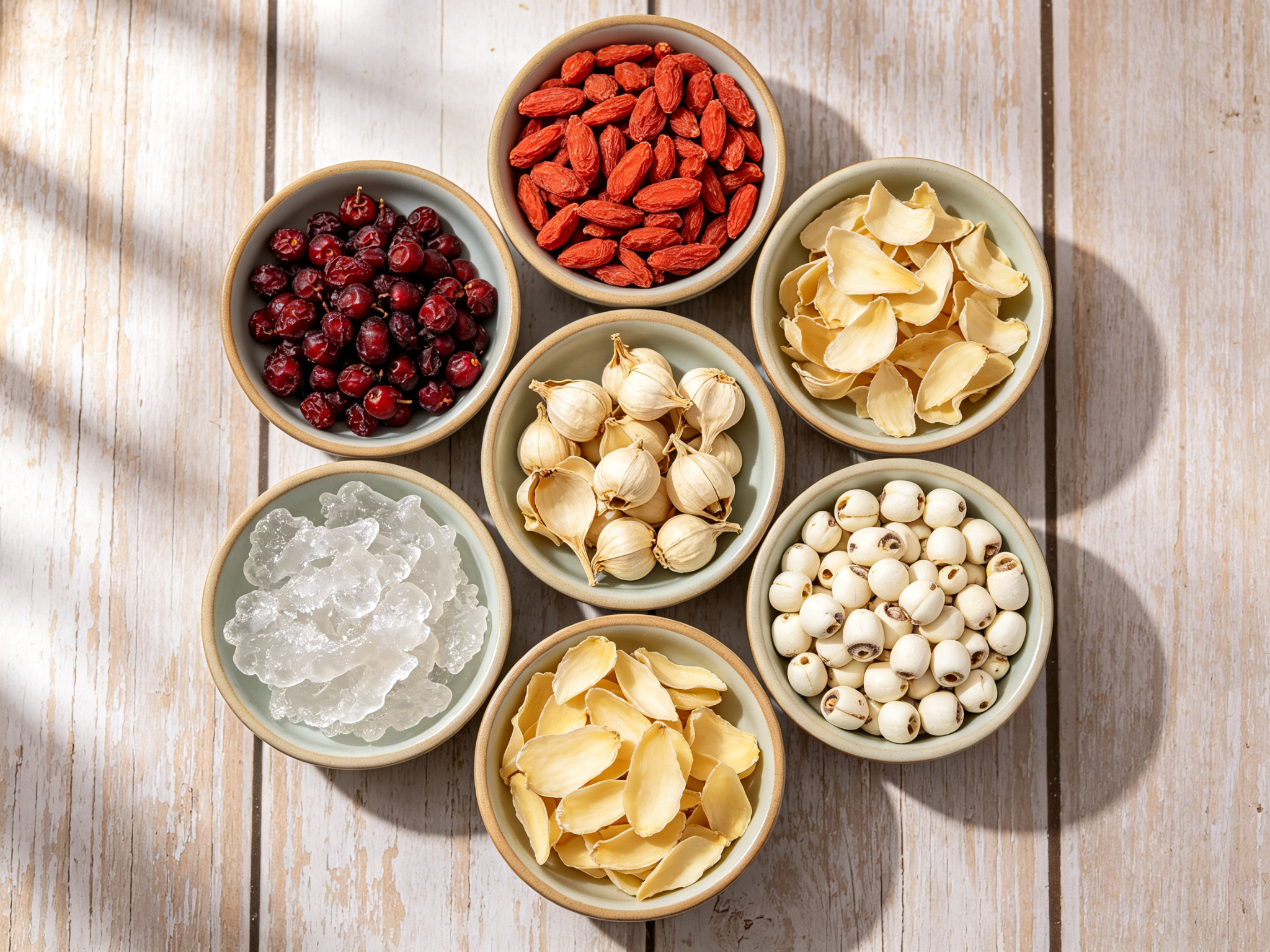
Traditional autumn eating leans toward moist, warm, nourishing foods. Pantry items that come up again and again include:
- Ophiopogon (mai dong)
- Schisandra berries (wu wei zi)
- Goji berries
- Lotus seeds
- Snow fungus (tremella)
- Dried lily bulbs
These are everyday pantry ingredients across much of East Asia. Add them to congee, steep them as a light tea, or simmer them into a gentle sweet soup — no complicated preparation required.
This isn’t only for older adults
It’s easy to assume seasonal “autumn eating” is something grandparents care about. But overwork, worry, poor sleep and catching a chill can leave anyone feeling rundown — regardless of age. Students carrying heavy study loads, people burning the candle at both ends, and anyone who tends to catch every cold going around as the weather turns, are all a good match for warmer meals, steadier sleep and gentler daily habits.
Autumn doesn’t have to feel like a long slump. A slightly earlier bedtime, a warmer breakfast, and a handful of seasonal pantry staples can make the transition feel noticeably softer.
A note from us: This article shares traditional seasonal wellness and food culture for general interest only. It is not medical advice, diagnosis or treatment. If you feel persistently exhausted, unwell, or low in mood, please speak with a qualified healthcare professional.