Solar Terms · Seasonal Eating
White Dew arrives on 7 September 2026. In a normal year it marks the end of the humid late-summer stretch. This year, plenty of home cooks in East Asia are keeping a familiar pair of pantry powders on the counter a little longer.

What the White Dew solar term actually means
White Dew — Bailu in Chinese — begins at 22:41 on 7 September 2026 and runs until the Autumn Equinox on 23 September. It is the 15th of the 24 solar terms in the traditional East Asian calendar and the third solar term of autumn.
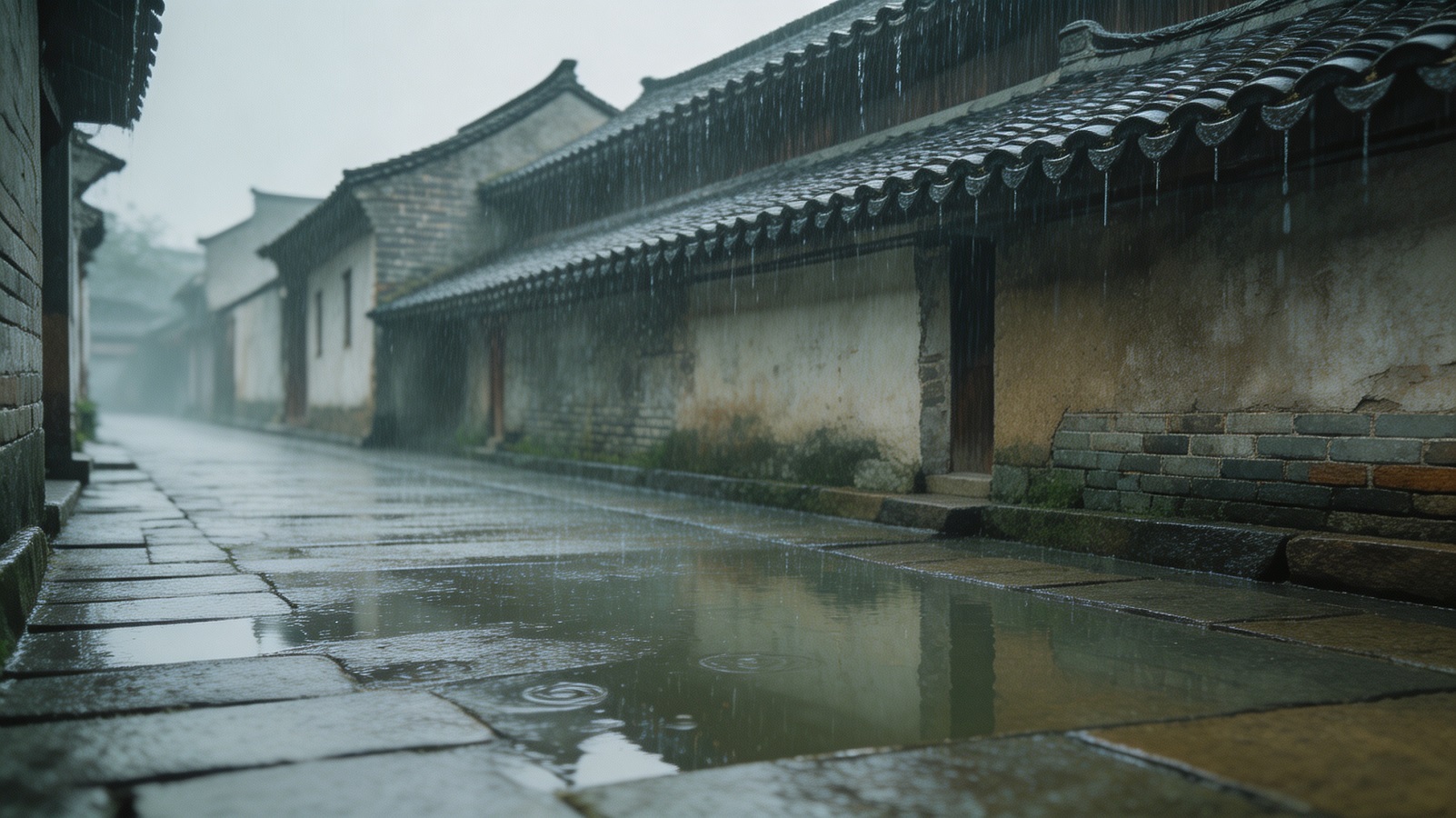
The name is literal. By early September, nights cool down fast while days stay warm. Water vapour in the air condenses on grass, railings and leaves before dawn, and in low morning light those droplets look pale and silvery. An old commentary on the seasonal calendar puts it simply: as the cool air thickens, dew gathers and turns white.
Three things usually change around this date:
- The gap between day and night temperature widens. A warm afternoon can be followed by a genuinely chilly morning.
- The humid season starts to break. Across much of East Asia, the sticky, rain-heavy weeks of high summer gradually give way to drier, clearer air.
- Kitchens change gear. Cold drinks and raw salads step back; warm porridges, soups and stews come forward.
The six-week window: from Great Heat to White Dew
There is an old line in Chinese seasonal writing worth quoting here:
“The season of damp earth begins at Great Heat and ends at White Dew.”
Translated into dates, that is roughly 23 July to 7 September — about six weeks. In a typical year, this is the most humid stretch of the whole calendar: thunderstorms, muggy evenings, laundry that will not dry, and a general feeling of heaviness in the air.
White Dew traditionally closes that window. Once the nights get properly cool, the damp fades and the crisp, dry part of autumn takes over. That is why so many regional food customs cluster around this date — White Dew tea, longan fruit, sweet potato, and freshly brewed rice wine all show up in different parts of China.
Why 2026 feels different to a lot of people
If you have spent this summer in parts of southern China, you may have noticed it simply did not dry out. There is a traditional explanation that has been circulating widely this year, and it is worth repeating with the right label on it.
This is almanac lore, not weather science
The idea below comes from wu yun liu qi (“five movements and six qi”), a centuries-old Chinese framework for reading the year in six roughly two-month blocks. It is a cultural and historical system, not meteorology, and it is not a medical diagnosis. Treat it the way you would treat a folk almanac: interesting, traditional, and worth checking against your own local weather forecast.
In that framework, 2026 is a Bingwu year. The fourth two-month block — from Great Heat on 23 July to the Autumn Equinox on 23 September — is read as being governed by “damp earth” on both the primary and the secondary layer, sitting on top of a year whose overall pattern is read as water-heavy. Three damp-flavoured layers stacked together is what commentators this summer have been calling a “triple dampness” year, and it is described as an alignment that turns up only about once every thirty years.
Whatever you make of the almanac, the practical consequence people describe is mundane and recognisable: a summer with more rain than usual, air that stays sticky into September, and a damp season that seems to linger past its normal end date.
That is the whole reason for the kitchen advice below. In an ordinary year, you would put the humid-season ingredients back on the shelf around White Dew. In a year like this one, a lot of households are simply keeping them out for a couple of weeks longer.
The two pantry powders: poria and Chinese yam
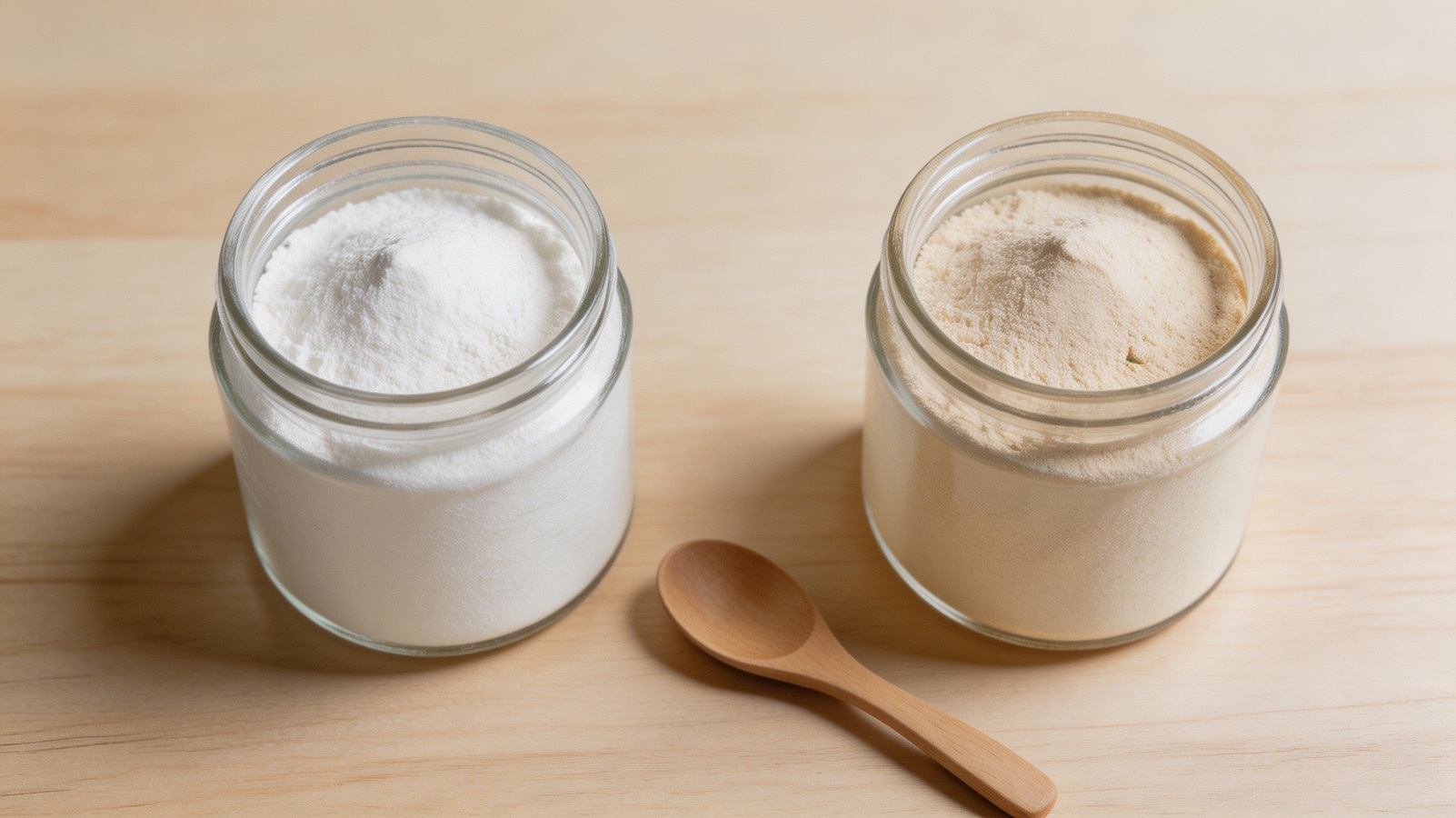
Two ingredients dominate late-summer home cooking across southern China, and both are sold as fine powders that stir straight into hot food. Neither is exotic, neither is expensive, and both are used as food — in porridge, in batter, in soup.
Poria powder (fuling)
A pale, very mild powder made from a dried fungus that grows on pine roots. It has almost no flavour of its own, which is exactly why it is so easy to cook with — it thickens porridge and soups without changing the taste. In Chinese home kitchens it is a standard late-summer staple.
Chinese yam powder (shan yao)
A starchy root vegetable, dried and milled. It behaves like a gentle thickener with a faintly sweet, nutty note. Home cooks often pair it with poria rather than using it alone, and it is a common addition to congee for people who find rich or heavy meals sit awkwardly.
How much to use, and how this year changes it
The advice circulating for 2026 is straightforward: because the humid stretch is running long, use roughly double what you would normally put in during a standard White Dew week — and if you tend to feel heavy or bloated after meals, add Chinese yam powder alongside the poria.
In practical kitchen terms:
| Situation | Poria powder | Chinese yam powder |
|---|---|---|
| A normal White Dew week | Start with about half a teaspoon per serving | Optional |
| A long, damp late summer (2026) | About one teaspoon per serving, once a day | Optional |
| Meals feel heavy; appetite is flat | About one teaspoon per serving | Add a similar amount alongside |
Two sensible guardrails. First, these are cooking quantities for a bowl of porridge or a pot of soup — not a supplement regimen, and the numbers above are home-kitchen convention, not a prescribed dose. Second, if you are pregnant or breastfeeding, managing a chronic condition, taking prescription medication, or cooking for a young child, talk to your doctor or a registered dietitian before making any of this a daily habit.
Four easy ways to actually cook with them
The most common mistake with both powders is dumping them into a cold liquid and expecting them to dissolve. They do not. They are starches, and starches need heat and movement.
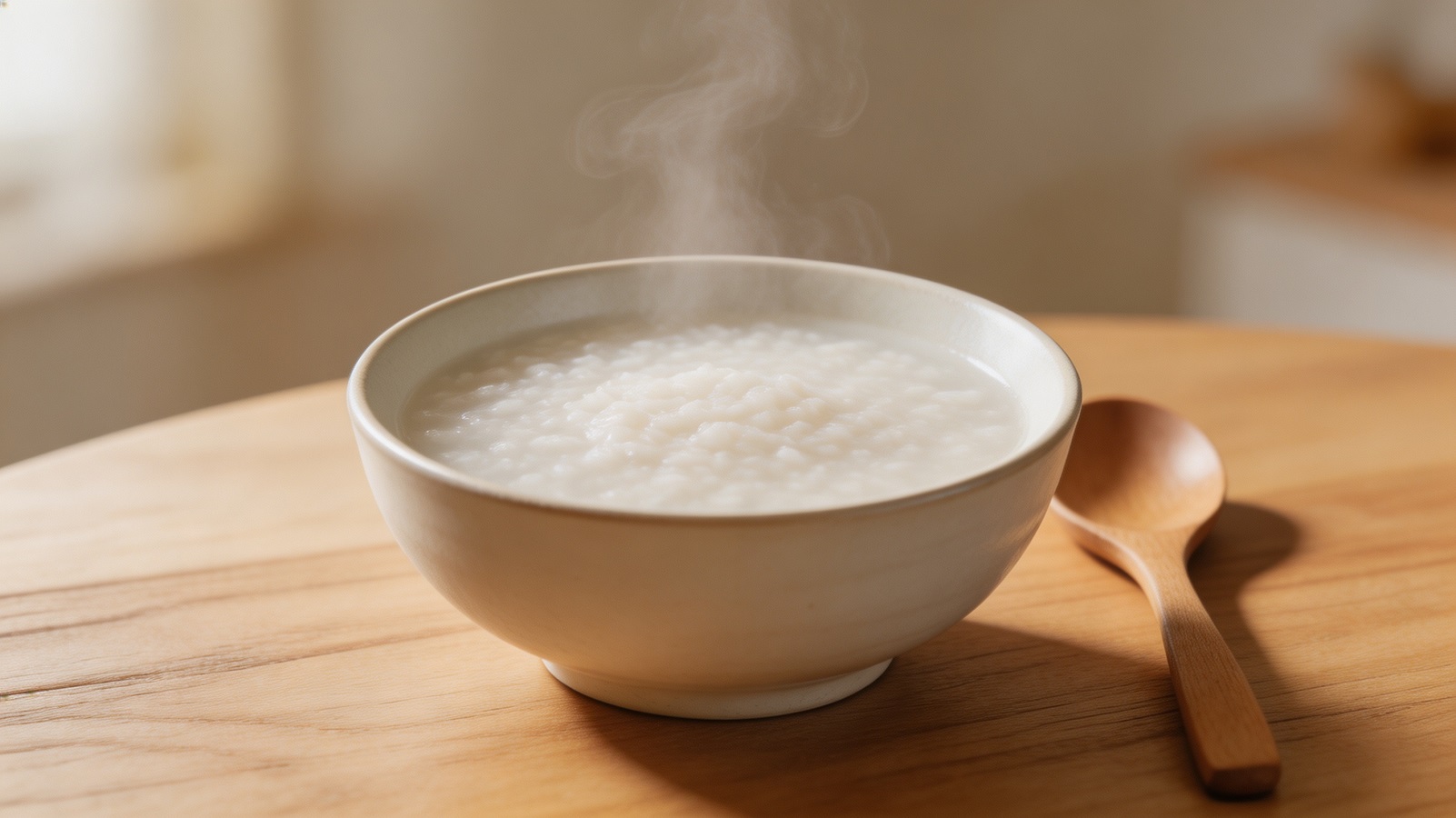
- Stir them into porridge at the end Cook your rice or millet congee as usual. Slake the powder in a small cup of cold water first to make a smooth paste, then stir that paste into the simmering pot for the last two to three minutes. It thickens gently and stays silky. This is the single most popular way to use it at home.
- Use them as a soup thickener Any clear vegetable or mushroom soup works. Add the slaked paste in the final few minutes of cooking, stir constantly, and you get a light body without flour or cornflour. Pairs especially well with Chinese yam slices, dried shiitake and sweetcorn.
- Fold them into breakfast batter Swap a tablespoon of your flour for a teaspoon of poria or yam powder in pancakes, waffles or steamed buns. The flavour difference is negligible and the texture gets a little more tender. Good route if someone at your table dislikes porridge.
- Make a warm morning cup Whisk one teaspoon into a mug of hot water or hot milk, add a little honey, and drink it warm. Fast, and the closest thing to a “coffee replacement” for a humid September morning. Chinese yam powder works better here than poria, which can taste chalky on its own.
Storage tip for a damp season
Both powders clump badly in humidity. Keep them in an airtight jar rather than the original pouch, store the jar in a cupboard away from the kettle and the hob, and use a completely dry spoon every single time. If the powder has hardened into lumps or smells musty, throw it out and buy a fresh jar.
Beyond the pantry: five habits for a damp late summer
Food is only half of it. Around White Dew, a few low-effort household habits make the season more comfortable for most people.
- Keep a light layer within reach. The old saying is “at White Dew, do not bare the body.” Days stay warm, mornings and evenings do not. A cardigan by the door beats a full wardrobe change.
- Warm up the plate. Shift from iced drinks and cold salads toward warm cooked vegetables, soups and stews. Your kitchen, not a rulebook, decides how far to go.
- Dry the house out. Open windows on dry afternoons, run a dehumidifier in the dampest room, and never leave wet laundry bundled in the machine. Mould is the very real, very unromantic side of a humid September.
- Move a little, most days. A 20-minute walk after dinner is the standard advice in every seasonal column you will read this month, and it is standard for a reason.
- Protect your sleep from the temperature swing. A blanket you can pull up at 3 a.m. matters more than a heavy duvet you will kick off at midnight.

Who should check with a professional first
Everything on this page is about cooking. Still, a short list of people who should get individual advice before turning any seasonal ingredient into a daily routine:
- Anyone pregnant, breastfeeding or planning a pregnancy
- Children and older adults with a reduced appetite or swallowing difficulties
- People managing diabetes, kidney disease, or any condition with a prescribed diet
- Anyone taking prescription medication, including blood thinners and diuretics
- Anyone with a known allergy to mushrooms, fungi, or root vegetables
- Anyone whose tiredness, bloating or discomfort is persistent rather than seasonal — that warrants an appointment, not a pantry adjustment
Please note. This article is about seasonal food culture and home cooking. It is not medical advice, it makes no health claims, and it is not intended to diagnose, treat, cure or prevent any condition. Poria and Chinese yam are described here purely as culinary ingredients. Quantities mentioned are ordinary cooking amounts, not recommended doses. If you have a health concern, or you are unsure whether an ingredient suits you, please speak with a qualified doctor or registered dietitian. When in doubt, follow the directions on your product packaging.
Frequently asked questions
When exactly is White Dew in 2026?
White Dew begins at 22:41 on Monday 7 September 2026 and ends when the Autumn Equinox begins on 23 September 2026. Solar term dates shift by a day or so from year to year because they are based on the sun's position, not on the calendar month.
What is poria powder, and what does it taste like?
Poria (Chinese: fuling) is a dried fungus that grows on the roots of pine trees. Milled into a fine pale powder, it has essentially no flavour — it is used mainly for the smooth, slightly thick texture it gives to porridge and soup. You will find it in Asian grocery stores and online, usually in jars or sealed pouches.
Is Chinese yam powder the same as the yam I roast?
Not exactly. “Chinese yam” (shan yao) refers to a long, pale, starchy root vegetable common in East Asian cooking — it is a different species from the orange-fleshed sweet potato often labelled “yam” in US supermarkets. The powder is that root, dried and milled. Check the label: you want Dioscorea / Chinese yam, not sweet potato flour.
Why do people say 2026 is unusually damp?
It comes from a traditional Chinese almanac system called wu yun liu qi, which divides the year into six two-month blocks. For 2026, the block covering 23 July to 23 September is read as doubly “damp earth”, layered over a year read as water-heavy — hence the phrase “triple dampness”, described as a roughly once-in-thirty-years alignment. It is cultural lore rather than a meteorological finding, though many people in southern China did report an unusually wet, sticky summer in 2026.
Can I use these powders every day?
They are ordinary cooking ingredients used in small amounts, and many households do use them through the late-summer weeks. But “every day, indefinitely” is a different question, and the right answer depends on your own health situation. Ask your doctor or a registered dietitian, especially if you are pregnant, taking medication, or managing a chronic condition.
My powder has gone lumpy. Is it still usable?
Small lumps that break apart easily under a spoon are just moisture — sift them or slake the powder in cold water before adding it to the pot. If the powder has set into a hard mass, changed colour, or developed a musty or sour smell, discard it. Humid seasons are hard on dried powders.
What else is traditionally eaten at White Dew?
Customs vary by region. White Dew tea — leaves picked around this solar term — is popular in parts of Jiangsu and Zhejiang. Some southern areas eat longan fruit on the day, others eat sweet potato, and rural households in several provinces brew rice wine at White Dew. All of them reflect the same idea: eat what the season is offering right now.
Cooking with the solar terms, all year round
We publish a short seasonal guide at every one of the 24 solar terms — what is in season, what people actually cook, and the folklore behind it.
Read the seasonal kitchen archive →Related reading: Great Heat: late-summer cooking basics · Autumn Equinox 2026: the turning point · A beginner's guide to Asian pantry powders