Tired of that awful stench every time you open your car door? Before you grab chemical air fresheners or odor-eliminating sprays, check your kitchen. are actually fantastic, all-natural odor neutralizers: lemon and grapefruit peels.
In this guide, we'll show you exactly how to use citrus peels to absorb and neutralize car odors, where to place them, how often to swap them out, and a few extra tricks to keep your ride smelling fresh—without harsh chemicals.
Why Do Cars Develop Bad Odors?
Car odors usually come from three main sources:
- Food & spills – crumbs and sticky residue trapped under seats and in crevices.
- Moisture & mold – damp mats, wet umbrellas, or AC condensation.
- Cigarette smoke & pets – stubborn particles that cling to fabric.
These smells linger because they get absorbed into upholstery, carpets, and the cabin filter—which is why simply spraying air freshener only masks the problem.
Do Lemon and Grapefruit Peels Actually Work?
Yes—and here's the science behind it. Citrus peels contain natural essential oils (like limonene) that act as gentle deodorizers. They don't just cover up the smell; they help absorb moisture and neutralize odor molecules in the air, leaving behind a fresh, clean citrus scent.
Step-by-Step: How to Deodorize Your Car with Citrus Peels
Step 1: Prep Your Peels
Use fresh lemon or grapefruit peels—or a mix of both. Rinse them lightly and pat dry. Cut them into a few large strips so they release more natural oils.
Step 2: Choose the Right Spots
Place the peels where air circulates and odors collect:
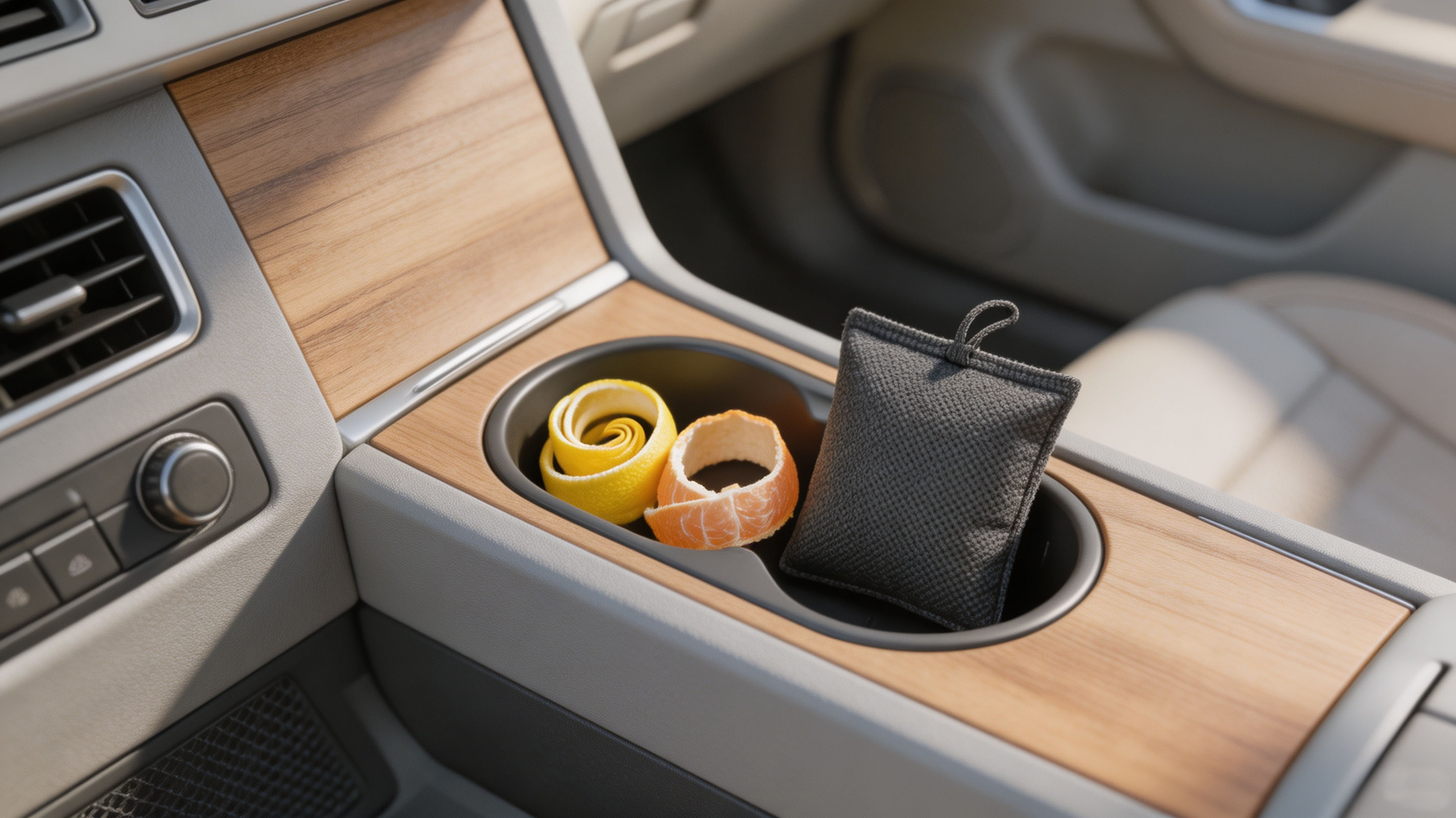
- In the cup holders
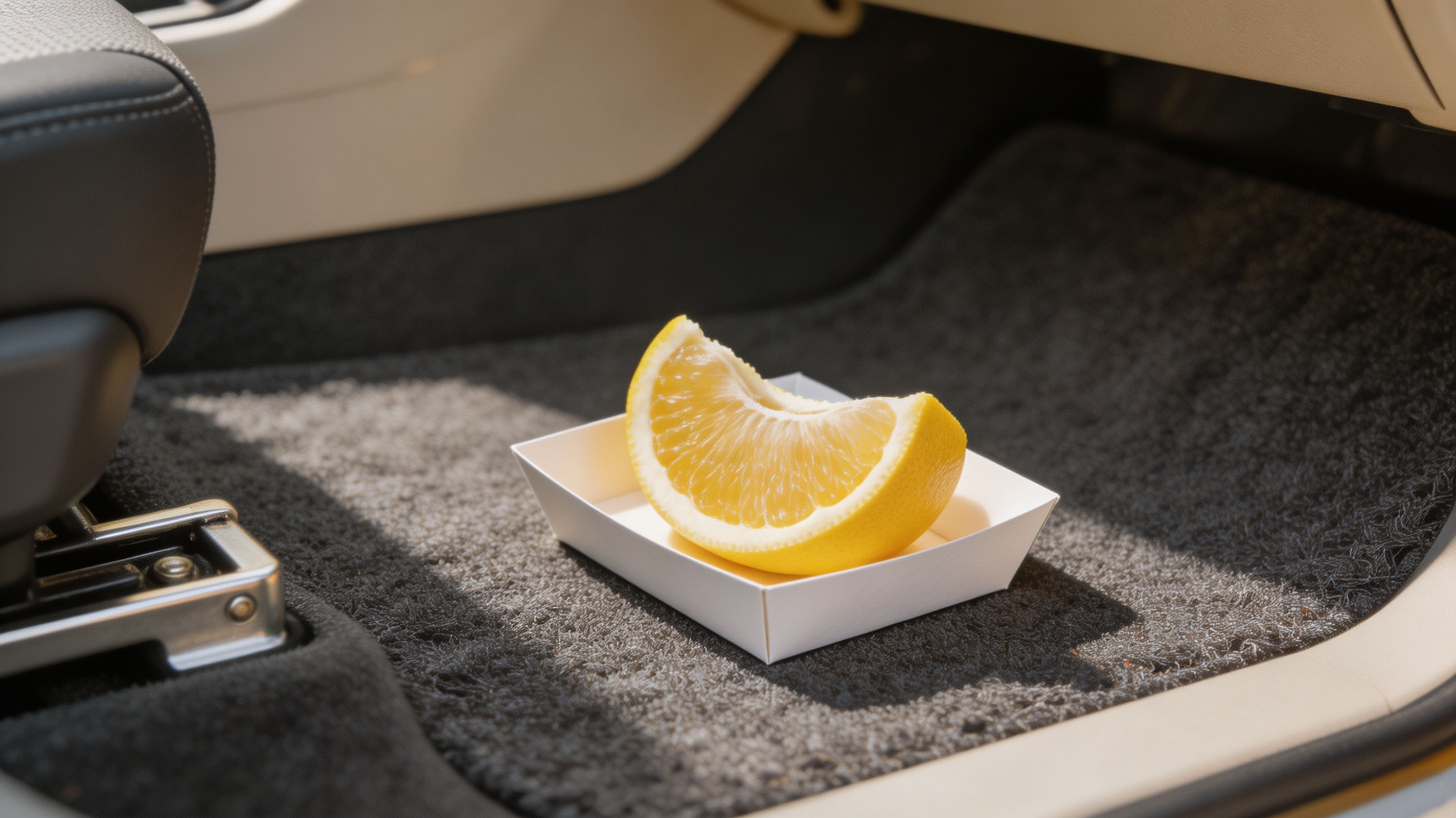
- Under the front seats
- In the door pockets
- In the trunk (great for gym bags and groceries)
Step 3: Leave Them (and Let Airflow Do the Work)
Park in a cool, shaded spot and crack the windows slightly if possible. The airflow helps the citrus oils circulate through the cabin.
Step 4: Replace Every 2–3 Days
Peels dry out and lose their power after a few days. Swap them out every 2 to 3 days—or whenever the citrus scent fades—for continuous freshness.
Pro Tips for Best Results
- Double up with baking soda: Place a small open box of baking soda under the seat to absorb deep-set odors while the peels add fragrance.
- Try grapefruit for tougher smells: Grapefruit peel has a slightly stronger, zestier punch that works well on smoke and musty odors.
- Keep them out of direct sunlight: Sun-heated citrus can spoil faster and attract fruit flies.
- Never block your view: Keep peels away from the dashboard and windshield area.
Other Natural Deodorizers Worth Trying
- Fresh coffee grounds in a breathable pouch
- An open box of baking soda
- A few drops of essential oil on a cotton ball
- Activated charcoal bags
FAQ
How long does it take for citrus peels to remove car odor?
You'll usually notice a fresher scent within a few hours, with significant improvement after a full day or two.
Will lemon peels leave a sticky mess in my car?
Only if left too long. Replace them every 2–3 days and place them on a small plate or in a breathable pouch to keep surfaces clean.
Can I use orange peels instead?
Absolutely. Oranges work the same way—just slightly sweeter in scent than lemon or grapefruit.
Final Thoughts
You don't need expensive sprays or toxic chemicals to keep your car smelling great. A handful of lemon and grapefruit peels—placed in the right spots and swapped out regularly—is one of the easiest, cheapest, and most eco-friendly ways to remove car odors for good.